

Digital transformation is not merely about adopting new technologies. It is a fundamental shift in how organizations operate, deliver value to customers, and compete in the modern economy. For large enterprises, navigating this shift requires a structured approach. This is where enterprise architecture becomes essential. Specifically, the ArchiMate modeling language provides a robust framework for visualizing and analyzing complex business and IT landscapes.
Organizations often struggle to align their strategic goals with their actual capabilities. Silos between business units and IT departments create friction. ArchiMate bridges this gap by offering a standardized way to describe the enterprise. It allows stakeholders to see the connections between business processes, applications, and infrastructure. This visibility is crucial for planning effective transformation initiatives.
In this guide, we explore how this architecture modeling language supports digital transformation strategies. We will examine the layers involved, the alignment mechanisms, and practical applications for modernizing enterprise systems.
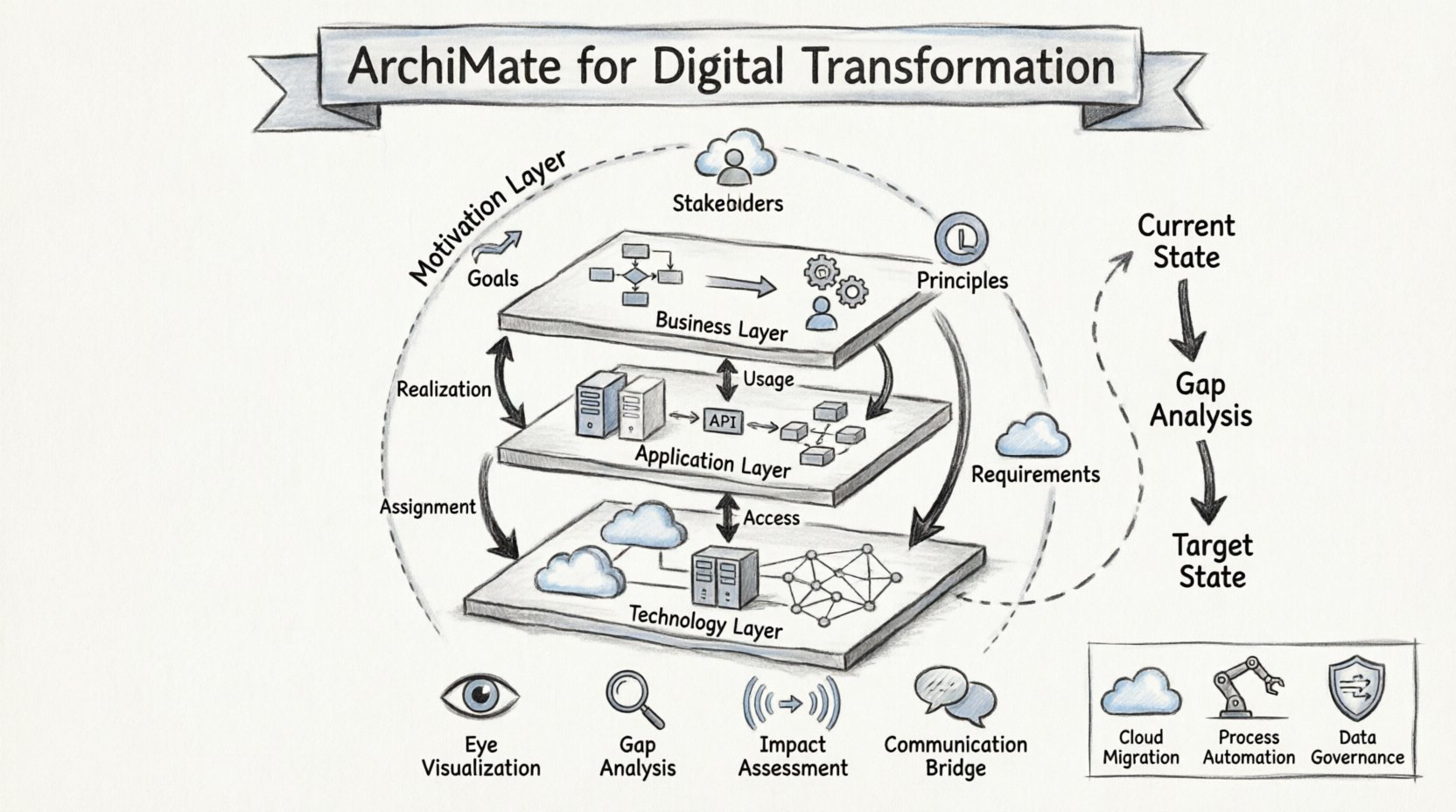
🧩 Understanding the Core Architecture Layers
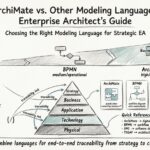
To understand how this framework aids transformation, one must understand its structure. The standard defines several views to represent different aspects of the enterprise. The most prominent are the three core layers: Business, Application, and Technology.
1. The Business Layer
This layer represents the organization itself. It includes elements such as:
- Business Processes: The activities that create value for customers.
- Business Functions: The organizational units or roles responsible for activities.
- Business Objects: Data or information managed by the business.
- Business Actors: People or systems that perform processes.
During transformation, the business layer is often the starting point. Leaders must define what the future state looks like before worrying about the technology required to support it.
2. The Application Layer
This layer describes the software systems that support the business processes. It includes:
- Application Services: The functionality provided by the software.
- Application Components: The building blocks of the software.
- Application Interfaces: The points of interaction between components.
Transformation often involves replacing legacy systems with modern platforms. Mapping the current application landscape against the desired business processes helps identify which systems to retire, upgrade, or replace.
3. The Technology Layer
This layer represents the hardware and software infrastructure that hosts the applications. It includes:
- Infrastructure: Servers, networks, and storage.
- System Software: Operating systems and databases.
- Network: Connectivity and communication channels.
Cloud migration is a common transformation goal. The technology layer models the move from on-premise data centers to cloud environments, ensuring performance and security requirements are met.
🔗 Aligning Strategy with Execution
One of the primary challenges in digital transformation is the disconnect between high-level strategy and day-to-day execution. Enterprise architecture addresses this through the concept of alignment. ArchiMate provides specific views and relationships to ensure that every technical decision supports a business goal.
The Motivation Layer
While the three core layers describe the “what”, the Motivation Layer explains the “why”. It includes:
- Stakeholders: Who is involved or affected?
- Assets: What is being protected or utilized?
- Goals: What is the desired outcome?
- Principles: What rules guide the decision-making?
- Requirements: What conditions must be met?
By linking a specific software component (Technology Layer) to a business goal (Motivation Layer), architects can prove the value of an investment. If a new server cannot be traced back to a business requirement, its justification becomes weak.
The Relationship Mechanisms
ArchiMate defines specific relationships that connect elements across layers. These relationships are critical for tracing impact.
- Realization: Shows how a component implements a process or service.
- Usage: Shows how a process consumes a service.
- Assignment: Links an actor to an object or process.
- Access: Indicates how one element accesses another.
These connections create a traceability matrix. If a business process changes, the architect can trace the change down to the specific application and infrastructure elements that will require modification.
🚀 Key Capabilities for Transformation
Adopting this modeling language offers several distinct capabilities that facilitate change management. These capabilities help organizations move from a reactive posture to a proactive one.
1. Visualization of Complexity
Enterprise systems are often too complex to understand through text documents alone. Diagrams provide a visual summary of the landscape. Stakeholders can see the flow of information and the dependencies between systems. This shared understanding reduces miscommunication during planning phases.
2. Gap Analysis
Transformation requires moving from a Current State to a Target State. ArchiMate models allow architects to create side-by-side comparisons. This makes it easy to identify gaps in capabilities, missing processes, or obsolete technologies. The gap analysis forms the basis of the implementation roadmap.
3. Impact Assessment
Before making changes, it is vital to understand the consequences. The relationships defined in the language allow for impact analysis. If a database is changed, the model shows which applications depend on it and which business processes rely on those applications. This prevents unintended outages.
4. Communication Bridge
Business leaders and IT teams often speak different languages. Business leaders focus on value, processes, and goals. IT teams focus on code, servers, and networks. ArchiMate provides a common notation. A diagram created by an architect can be understood by both groups, facilitating better collaboration.
🌐 Practical Transformation Scenarios
To illustrate the utility of this framework, we look at specific scenarios where it drives digital transformation.
Scenario A: Cloud Migration
Moving to the cloud is a major transformation effort. It is not just about lifting and shifting servers. It often requires re-architecting applications to be cloud-native.
- Current State Model: Documents the on-premise infrastructure and application dependencies.
- Target State Model: Defines the cloud architecture, including virtual machines, containers, and serverless functions.
- Migration Path: The model helps sequence the migration. It ensures that critical business processes are not disrupted during the transition.
Scenario B: Process Automation
Organizations often seek to automate repetitive tasks to improve efficiency. This requires understanding the end-to-end process.
- Process Modeling: The business layer maps out the current manual workflow.
- Service Identification: The application layer identifies which services can be automated via APIs or bots.
- Integration: The model shows how the automation service interacts with the legacy systems.
Scenario C: Data Governance
Data is a critical asset. Governance ensures data quality and security.
- Data Objects: The business layer defines what data is important.
- Application Services: The application layer shows how data is created and read.
- Security: The motivation layer defines the compliance requirements (e.g., GDPR).
This ensures that data handling practices are aligned with legal obligations and business policies.
📊 Common Challenges and Mitigation
While the framework is powerful, implementation is not without challenges. The table below outlines common issues and how to address them.
| Challenge | Impact | Mitigation Strategy |
|---|---|---|
| Model Complexity | Diagrams become too dense to read, confusing stakeholders. | Use separate views for different audiences. Do not show every detail in one diagram. |
| Lack of Skills | Staff may not understand the notation or modeling concepts. | Provide training and certification. Start with simple models and expand gradually. |
| Outdated Models | Models do not reflect the current reality, leading to poor decisions. | Establish a governance process to update models regularly. Link models to live data where possible. |
| Tool Fragmentation | Using different tools for different layers creates silos. | Adopt a unified approach to modeling. Ensure the tool supports the full standard. |
| Resistance to Change | Teams may resist documenting their work or changing processes. | Emphasize the benefits. Show how modeling reduces rework and clarifies requirements. |
📈 Measuring Transformation Success
How do you know if the transformation is successful? Relying on vague metrics is insufficient. The architecture itself provides the foundation for defining Key Performance Indicators (KPIs).
1. Alignment Score
This measures how well the IT landscape supports the business strategy. By tracing goals to capabilities, you can calculate the percentage of strategic goals that have full technical support. A low score indicates misalignment.
2. Change Impact Time
How long does it take to assess the impact of a change request? With a good model, this time should decrease. The model provides the data needed for rapid assessment.
3. System Redundancy
Transformation often aims to reduce complexity. You can measure the reduction in duplicate applications or redundant data stores. Fewer systems generally mean lower maintenance costs.
4. Process Efficiency
By modeling the business processes, you can measure cycle times. After transformation, these times should improve. The model helps identify bottlenecks that were previously invisible.
🔮 Future Proofing the Enterprise
Digital transformation is not a one-time event. It is an ongoing journey. The technology landscape evolves rapidly. New tools, regulations, and market demands emerge constantly. An architecture framework provides the stability needed to navigate this volatility.
Adaptability
The modular nature of the layers allows for flexibility. If the technology layer changes (e.g., moving to quantum computing), the business layer may remain largely the same. This separation of concerns allows the organization to adapt without rewriting its entire strategy.
Standardization
Using a standard notation ensures that the architecture is portable. If the organization acquires another company, the models can be merged or compared easily. This is vital for mergers and acquisitions.
Continuous Improvement
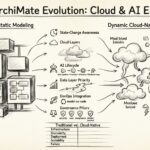
Architecture is a living artifact. It should be reviewed and updated regularly. This continuous improvement cycle ensures that the enterprise remains agile. It moves the organization from a state of static documentation to dynamic management.
🤝 Integrating with Other Frameworks
ArchiMate is often used in conjunction with other frameworks, such as TOGAF. This integration creates a comprehensive ecosystem for enterprise management.
- TOGAF: Provides the methodology for the architecture development lifecycle (ADM).
- ArchiMate: Provides the notation for the architecture artifacts.
TOGAF tells you the steps to take. ArchiMate tells you how to represent the results of those steps. Together, they cover the “how” and the “what” of enterprise architecture. This combination ensures that the transformation strategy is not only well-planned but also well-documented.
🛠️ Implementation Roadmap
For organizations ready to adopt this approach, a structured roadmap is recommended. This ensures a smooth transition and maximizes value.
- Assess Current Maturity: Determine the current level of architecture capability within the organization.
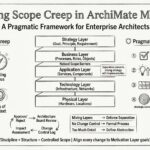
- Define Scope: Decide which parts of the enterprise will be modeled first. Start with a high-impact area.
- Train the Team: Ensure the architects and stakeholders understand the notation.
- Build the Baseline: Create the Current State model. This is the foundation for all future planning.
- Design the Target: Create the Target State model based on strategic goals.
- Develop the Roadmap: Define the projects and phases required to move from Current to Target.
- Govern the Models: Establish a process to keep the models up to date.
📝 Final Thoughts
Digital transformation is a complex endeavor that requires clarity and precision. Without a structured approach, organizations risk investing in technology that does not solve business problems. ArchiMate provides the necessary structure to visualize, analyze, and communicate the enterprise landscape.
By focusing on the layers, relationships, and motivations, leaders can make informed decisions. The standard enables a shared understanding across the organization. It turns abstract strategy into concrete plans. It transforms chaos into order.
The journey toward digital maturity is long. However, with the right tools and methods, the path becomes clear. Enterprise architecture is not just a technical exercise. It is a strategic imperative. It ensures that every line of code and every server supports the mission of the organization. This alignment is the key to sustainable success in the digital age.