

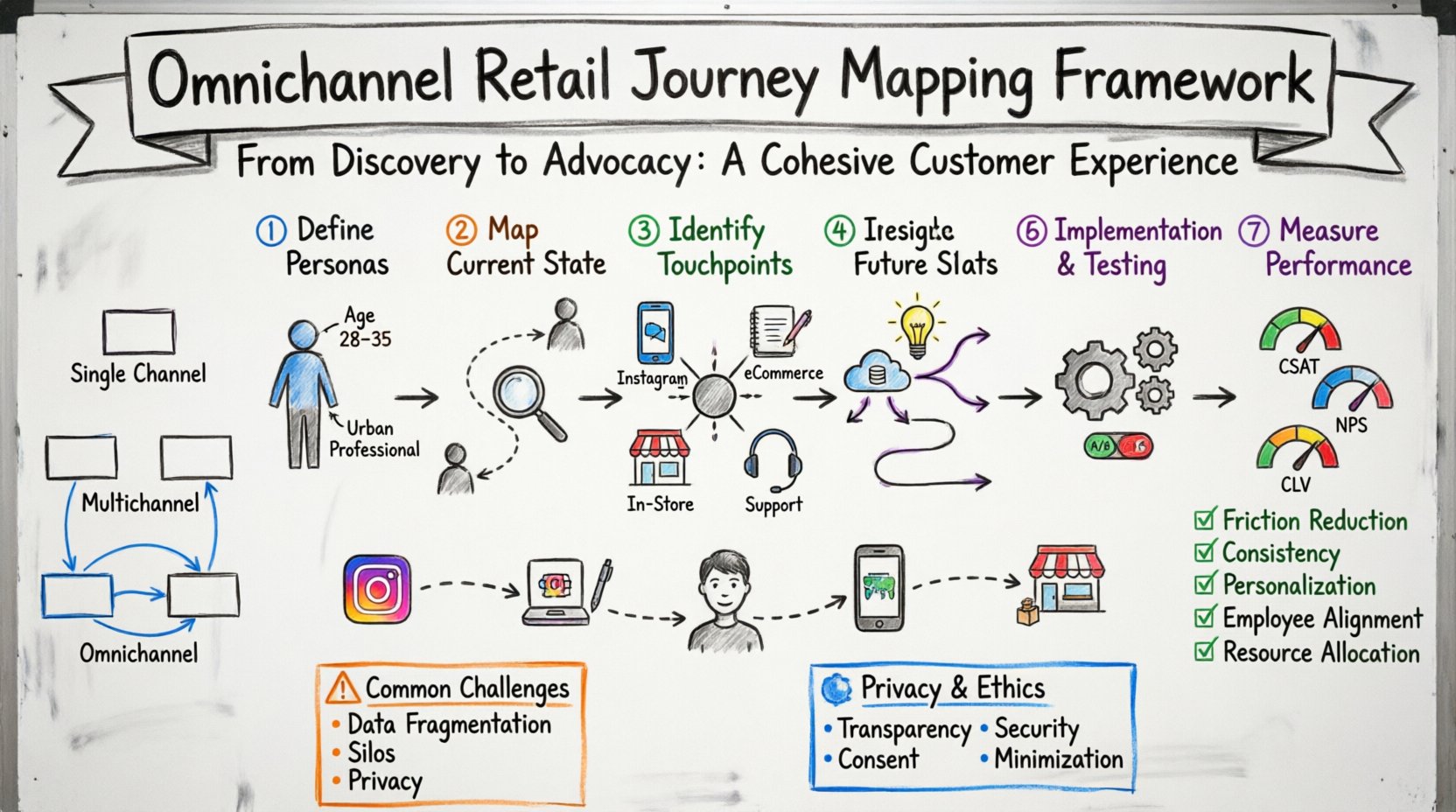
The retail landscape has shifted fundamentally. Today, a customer might discover a product on Instagram, research reviews on a laptop, check inventory at a local store via a mobile app, and finally purchase online with in-store pickup. This fluid movement across devices and locations defines the omnichannel experience. To navigate this complexity, retailers need a structured approach to understanding the customer path. This is where journey mapping becomes essential.
Creating a robust omnichannel retail journey mapping framework is not merely about drawing a diagram. It involves analyzing data, understanding psychological triggers, and aligning operational capabilities. The goal is to create a cohesive narrative where every touchpoint reinforces the brand promise. This guide provides a detailed breakdown of how to construct this framework effectively.
🔄 Understanding the Omnichannel Shift
Many organizations confuse multichannel with omnichannel. Multichannel means having several channels available, but they often operate independently. Omnichannel integrates these channels so the customer experience is continuous. Mapping the journey requires recognizing that the customer does not see channels; they see a single brand.
- Single Channel: Transactions occur only in one environment, such as a physical store or a website.
- Multichannel: Multiple channels exist, but data and experiences are siloed. A customer service agent may not know a customer shopped online yesterday.
- Omnichannel: Channels are interconnected. Data flows freely, allowing for personalized interactions regardless of entry point.
Understanding this distinction is the foundation of the mapping process. If the infrastructure remains siloed, the map will only show a broken path. The shift from multichannel to omnichannel requires a cultural change within the organization, moving from channel-specific goals to customer-centric goals.
📊 Why Mapping is Critical for Modern Retail
Investing time in journey mapping yields tangible returns. It moves strategy from intuition to evidence-based decision-making. Below are the core benefits of this approach.
- Friction Reduction: Identifying where customers drop off allows for targeted improvements in the checkout or browsing process.
- Consistency: Ensures pricing, promotions, and brand voice remain uniform across web, mobile, and physical locations.
- Personalization: Data gathered during mapping enables tailored recommendations based on past behaviors.
- Employee Alignment: Staff across different departments understand the customer context, leading to better service.
- Resource Allocation: Understanding the most valuable paths allows investment in high-impact areas.
Without a map, teams work in isolation. Marketing drives traffic, but fulfillment cannot handle the volume. Sales focus on closing, but support struggles with post-purchase questions. A unified map aligns these functions and creates a shared vision for the customer experience.
🗺️ The 7-Step Framework for Journey Mapping
Building a successful framework requires a systematic process. This section outlines the specific phases needed to develop a comprehensive view of the customer journey.
1. Define Your Customer Personas
You cannot map a journey for everyone. You must identify specific archetypes that represent your core buyer groups. A persona goes beyond basic demographics. It includes motivations, goals, and pain points. Developing accurate personas ensures the strategy addresses real needs.
- Demographics: Age, location, income level, and family status.
- Psychographics: Values, lifestyle, shopping habits, and brand affinities.
- Behavioral Data: Average order value, frequency of purchase, preferred devices, and return rates.
- Emotional Drivers: What motivates the purchase? Is it convenience, status, or cost savings?
Creating detailed personas ensures the journey map reflects real human behaviors rather than abstract concepts. For example, a “Budget-Conscious Student” will have a different path than a “Luxury Seeker.” The student might compare prices across three devices before buying, while the luxury seeker expects immediate white-glove service.
2. Map the Current State (As-Is)
Before designing improvements, you must document the existing experience. This involves gathering data from all available sources. Interviews, surveys, and analytics data help paint this picture. This phase is about honesty; do not hide the pain points.
- Observation: Watch how customers move through stores or navigate the website. Look for hesitation or confusion.
- Feedback: Collect direct input from customers about their frustrations during post-purchase follow-ups.
- Process Audit: Review internal workflows that support the customer experience. How many clicks to purchase? How long to resolve a return?
- Customer Interviews: Conduct in-depth interviews to understand the “why” behind actions.
This phase often reveals surprising gaps. A customer might start on mobile but switch to desktop because the mobile interface is confusing. Documenting this transition is vital. You might find that the mobile site loads slowly, causing abandonment. This is a specific data point to address.
3. Identify Key Touchpoints
A touchpoint is any interaction a customer has with the brand. In an omnichannel setting, these multiply rapidly. It is crucial to categorize them accurately to ensure nothing is missed. A comprehensive list prevents blind spots in the strategy.
| Channel | Touchpoint Examples | Primary Goal |
|---|---|---|
| Social Media | Ads, Posts, Comments, DMs, Stories | Awareness & Engagement |
| E-Commerce | Website, App, Email, Cart, Checkout | Conversion & Retention |
| Physical Store | Signage, Staff, Fitting Room, POS, Display | Experience & Fulfillment |
| Customer Support | Chat, Phone, Email, Help Center, Social Replies | Resolution & Trust |
Each touchpoint must be optimized. A broken link on social media can undo the work of a successful email campaign. Consistency at every point is key. If the brand voice is casual on social but formal in emails, it creates cognitive dissonance.
4. Integrate Data Silos
For the map to be accurate, data must flow between systems. If the online store does not talk to the point-of-sale system, the journey is fragmented. This step focuses on the infrastructure required to support the map. Integration is the technical backbone of the experience.
- Unified Customer Profile: Create a single view of the customer by linking identifiers across channels. Use unique IDs to track behavior.
- Real-Time Sync: Inventory levels and order status must update instantly to prevent overselling or confusion.
- Data Quality: Ensure data is clean and standardized. Duplicate records or missing fields will skew the map.
- Privacy Compliance: Ensure data collection adheres to regulations like GDPR or CCPA.
Technical integration is the backbone of omnichannel success. Without it, the journey map remains theoretical. You might know a customer visited the store, but if the system doesn’t record it against their online profile, you cannot personalize the next interaction.
5. Design the Future State (To-Be)
With the current state mapped and data integrated, you can design the ideal experience. This involves removing barriers and enhancing positive interactions. The goal is a frictionless path from discovery to advocacy.
- Seamless Transitions: Allow customers to start a task on one device and finish on another without losing progress.
- Proactive Service: Notify customers of delays or shipping updates before they ask. Anticipate needs.
- Contextual Offers: Provide relevant deals based on current location or recent browsing history.
- Unified Identity: Ensure the customer is recognized instantly across all platforms.
This phase is about vision. It sets the standard for what the brand aims to deliver consistently. It moves from “what is happening” to “what should happen.” This often requires cross-functional collaboration to align on standards.
6. Implementation & Testing
Rolling out changes requires careful planning. A full-scale launch can be risky if issues arise. Pilot programs help mitigate this. Testing ensures that the theoretical improvements work in practice.
- Soft Launch: Test new processes with a small segment of users or a specific region.
- A/B Testing: Compare different versions of a journey step to see what performs better.
- Feedback Loops: Establish channels for immediate feedback during the rollout.
- Staff Training: Ensure all employees understand the new processes and how to execute them.
Iterative improvement is better than perfection on the first try. Adjustments based on real-world testing lead to a more resilient system. If a new checkout flow causes confusion, revert quickly and refine.
7. Measure Performance
The final step is ongoing measurement. A journey map is a living document that must evolve as customer behaviors change. Key performance indicators track success and highlight areas for further refinement.
| Metric | Definition | Why It Matters |
|---|---|---|
| Customer Satisfaction (CSAT) | Score from post-interaction surveys | Measures immediate happiness with a specific touchpoint. |
| Net Promoter Score (NPS) | Probability of recommending the brand | Indicates overall loyalty and brand health. |
| Customer Lifetime Value (CLV) | Total revenue expected from a customer | Shows long-term profitability of the journey. |
| Conversion Rate | Percentage of users completing a goal | Highlights effectiveness of the path to purchase. |
| Cart Abandonment Rate | Percentage of carts not converted to orders | Identifies friction in the checkout process. |
Regular reviews of these metrics ensure the framework remains relevant. If NPS drops, the map needs adjustment. If CLV rises, the strategy is working. Data-driven decisions replace guesswork.
🚧 Common Challenges in Omnichannel Mapping
Implementing this framework is not without obstacles. Retailers often face specific hurdles that can derail the process if not anticipated. Understanding these risks helps in planning mitigation strategies.
- Data Fragmentation: Legacy systems often resist integration. Modernizing infrastructure takes time and investment. Older POS systems may not support API connections.
- Organizational Silos: Marketing, sales, and operations often have different KPIs. Aligning goals is a cultural challenge. Marketing may want leads, while Sales wants qualified deals.
- Privacy Concerns: Customers are increasingly wary of data usage. Transparency is required to maintain trust. Over-collection can lead to distrust.
- Resource Constraints: Small teams may lack the bandwidth to map every touchpoint in detail. Prioritization is key.
- Technology Debt: Existing tech stacks may not support real-time data exchange. Upgrades can be costly.
Recognizing these challenges early allows for better planning. Prioritizing high-impact areas can help manage resource limitations. Start with the most critical customer paths rather than trying to map everything at once.
🔒 Data Privacy and Ethics
Collecting data to fuel the journey map must be done ethically. Customers expect control over their information. Clear privacy policies and opt-in mechanisms are necessary. Trust is a fragile asset in retail.
- Transparency: Clearly state what data is collected and why. Avoid hidden terms.
- Security: Protect sensitive information from breaches. Encryption and secure storage are mandatory.
- Consent: Ensure users agree to tracking before it occurs. Respect opt-outs immediately.
- Data Minimization: Only collect what is necessary for the journey. Excess data creates risk.
Ethical data practices build long-term trust, which is the currency of modern retail. If customers feel their data is being used responsibly, they are more likely to share insights that improve the experience.
📈 Sustaining Long-Term Success
Success in omnichannel retail is not a destination but a continuous process. The market changes, technology evolves, and customer expectations rise. The journey mapping framework must adapt alongside these shifts. Stagnation leads to obsolescence.
- Regular Audits: Review the map quarterly to identify new friction points. Markets change faster than internal processes.
- Training: Ensure staff are trained on new tools and processes. Human error is a common failure point.
- Customer Advocacy: Listen to customer feedback continuously, not just during surveys. Social listening is a powerful tool.
- Competitor Analysis: Monitor how competitors are evolving their journeys. Benchmarking keeps standards high.
By staying agile and responsive, retailers can maintain a competitive edge. The framework serves as a compass, guiding decisions that prioritize the customer at every turn. It ensures that growth is sustainable and customer-centric.
Building this capability takes time and commitment. However, the payoff is a resilient business model capable of thriving in a complex digital ecosystem. Focus on the customer, optimize the path, and watch the relationship deepen. The journey never truly ends, but the improvements compound over time.