


Backlog refinement is the heartbeat of successful agile development. When stories enter the backlog without proper scrutiny, technical debt accumulates, sprint velocity suffers, and development teams face unnecessary friction. A well-crafted user story serves as a contract between stakeholders and the engineering team, defining scope, value, and acceptance standards. This guide outlines the critical steps to validate user stories before they become actionable work items. By adhering to a structured review process, teams ensure clarity, reduce rework, and maintain a sustainable pace of delivery 🚀.
Why Backlog Hygiene Matters 🛡️
Many organizations struggle with a bloated backlog filled with vague requests. This state often leads to ambiguous sprint planning sessions and confusion during development. Investing time in the review phase pays dividends later in the lifecycle. Clear stories reduce the need for constant clarification calls and allow developers to focus on building rather than guessing requirements.
When a story is ready for the backlog, it should meet specific quality thresholds. This preparation prevents the common issue of “half-baked” features that stall progress. A disciplined approach to entry ensures that every item represents genuine value and is technically viable.
- Reduced Ambiguity: Clear requirements minimize misinterpretation risks.
- Faster Planning: Teams can estimate work accurately when details are known.
- Better Collaboration: Shared understanding bridges gaps between product and engineering.
- Lower Defect Rates: Defined acceptance criteria lead to higher quality output.
Core Elements of a Clear User Story 📝
The foundation of a strong story lies in its structure. While templates vary, the core components must remain consistent across the organization. A story is not merely a task; it is a narrative describing user value.
1. The User Persona
Who is this for? A story must identify the specific role or user segment benefiting from the feature. Without a defined persona, the team might build for the wrong audience. Consider the following:
- Is the user internal or external?
- What is their technical proficiency?
- What is their primary goal when interacting with this feature?
2. The Action
What does the user want to do? This describes the interaction. It should be active and specific. Avoid passive voice where possible. The action defines the boundary of the work required.
3. The Benefit
Why does this matter? Every feature must deliver value. If the benefit cannot be articulated, the story might be a distraction. This section helps prioritize work when capacity is limited.
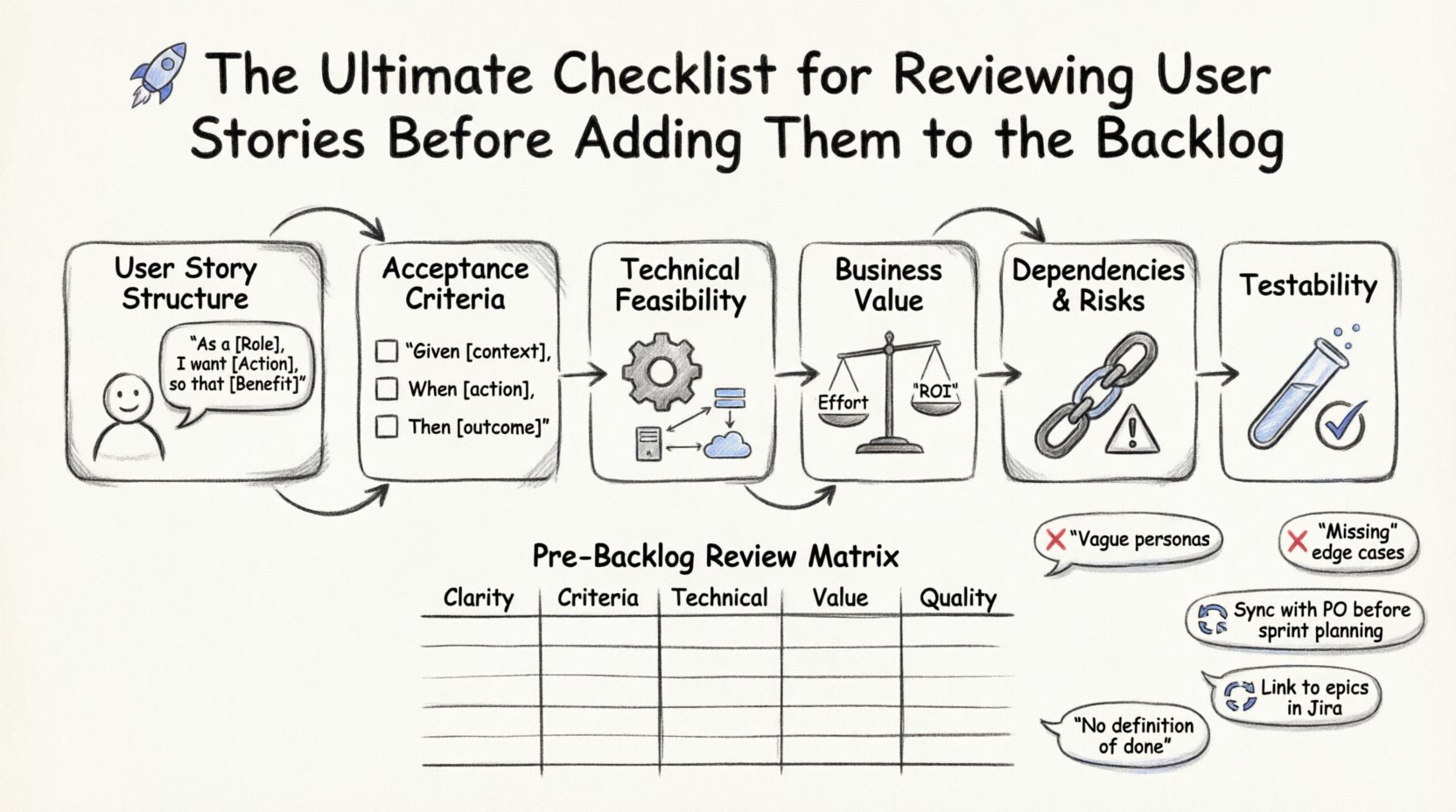
“As a [Role], I want [Action] so that [Benefit].”
Example: “As a shopper, I want to filter products by size so that I can find the right fit quickly.” This structure ensures the focus remains on the user, not just the code.
Defining Acceptance Criteria ✅
Acceptance criteria define the boundaries of the story. They are the conditions that must be met for the story to be considered complete. Without these, testing becomes subjective, and the definition of done remains unclear.
1. Happy Path Scenarios
Start with the ideal scenario. How does the system behave when the user does exactly what is expected? This establishes the baseline functionality.
2. Edge Cases and Error Handling
What happens when things go wrong? Users may enter invalid data, lose connectivity, or encounter permission errors. The story must account for these exceptions to ensure robustness.
3. Non-Functional Requirements
Performance, security, and accessibility standards often get overlooked. Include constraints regarding speed, data retention, or compliance needs within the criteria.
4. The Gherkin Format
Using structured language like Given-When-Then helps clarify logic. It forces the team to think through scenarios step-by-step.
- Given: The initial context or state.
- When: The action or event triggered by the user.
- Then: The expected outcome or result.
This format bridges the gap between technical implementation and business logic, making it easier for non-technical stakeholders to verify the work.
Assessing Technical Feasibility 🔧
Product owners often focus on the “what” and “why,” but the technical team must validate the “how.” Before a story enters the backlog, engineers should review the proposed solution for complexity and risk.
1. Architecture Impact
Does this feature require changes to the existing system architecture? New microservices, database schema changes, or API modifications introduce risk. These changes need to be identified early to prevent bottlenecks.
2. Resource Availability
Does the team have the necessary skills to implement this? If a story requires a specific technology not currently in use, training or hiring may be needed. This affects the timeline and should be flagged during review.
3. Legacy Constraints
Integration with older systems can be challenging. Ensure that the story accounts for potential limitations in legacy code or third-party integrations.
Evaluating Business Value and Priority 📊
Not all stories are created equal. Some drive significant revenue, while others maintain the status quo. A rigorous review process helps distinguish between high-impact work and low-priority tasks.
1. Strategic Alignment
Does this story align with the broader product vision and organizational goals? Work that deviates from the strategy can dilute team focus. Ensure every item supports the current quarter’s objectives.
2. Return on Investment (ROI)
Estimate the effort required versus the value delivered. High-effort, low-value items should be reconsidered or broken down. Prioritize items that offer the most significant return for the least amount of work.
3. Urgency vs. Importance
Distinguish between what needs to be done now and what can wait. Regulatory changes or security patches often take precedence over feature enhancements. The review stage is the time to make these distinctions.
Identifying Dependencies and Risks ⚠️
Stories rarely exist in isolation. They often rely on other work, external systems, or team availability. Unidentified dependencies are a primary cause of sprint delays.
1. Cross-Team Dependencies
Does this work require code from another team? If so, coordination is needed. Dependencies should be visible and tracked to prevent blockers during development.
2. External Integrations
APIs, payment gateways, or data providers may have their own timelines. Ensure these external factors are accounted for in the story scope.
3. Risk Assessment
What could go wrong? High-risk stories should be split into smaller, safer increments. Mitigation strategies should be documented alongside the story.
Ensuring Testability and Quality Standards 🧪
A story is not done until it is tested. The review process must ensure that the story is testable. If a feature cannot be verified, it cannot be accepted.
1. Test Coverage
Plan for automated and manual testing. Does the story allow for unit tests? Are there UI interactions that require manual verification?
2. Data Requirements
Testing often requires specific data sets. Ensure that test data can be generated or accessed without impacting production environments.
3. Performance Benchmarks
If the feature involves heavy computation or data processing, define acceptable load times. Performance testing should be part of the acceptance criteria.
The Pre-Backlog Review Matrix 📋
Use the following table as a quick reference guide during your refinement sessions. Check each item before moving a story to the backlog.
| Category | Checklist Item | Status |
|---|---|---|
| Clarity | Is the user persona defined? | ☐ |
| Clarity | Is the benefit clearly stated? | ☐ |
| Criteria | Are acceptance criteria specific? | ☐ |
| Criteria | Are edge cases covered? | ☐ |
| Technical | Has feasibility been assessed? | ☐ |
| Technical | Are dependencies identified? | ☐ |
| Value | Does it align with goals? | ☐ |
| Quality | Is it testable? | ☐ |
Common Pitfalls to Avoid 🚫
Even experienced teams fall into traps during the review process. Being aware of these common mistakes helps maintain high standards.
- Too Much Detail: Over-specifying the solution restricts developer creativity. Focus on the problem, not the implementation.
- Too Little Detail: Vague stories lead to wasted time. Ensure enough information exists to start work.
- Ignoring Accessibility: Building features that exclude users violates modern standards. Include accessibility requirements early.
- Siloed Reviews: Reviewing in isolation misses cross-functional insights. Involve QA and Devs in the discussion.
- Skipping the “Why”: Focusing only on the “What” creates confusion about priority and value.
Integrating the Review into Your Workflow 🔄
A checklist is only useful if it becomes part of the daily routine. Integrate these steps into your existing ceremony structure to ensure consistency.
1. Dedicated Refinement Sessions
Set aside time specifically for story review. Do not mix this with sprint planning. This allows for deep dives without time pressure.
2. Definition of Ready
Create a formal Definition of Ready (DoR) based on this checklist. A story cannot enter the sprint backlog unless it meets all DoR criteria.
3. Continuous Feedback Loop
After a story is completed, review the process. Did the story change significantly during development? Use this feedback to improve future reviews.
4. Stakeholder Involvement
Invite product managers and key stakeholders to refinement sessions. Their input ensures the story remains aligned with business needs.
Final Considerations 🌟
Building a high-quality backlog is an ongoing discipline. It requires commitment from both product and engineering teams. By consistently applying this review process, organizations can reduce waste, improve delivery speed, and create better products for their users.
Remember that perfection is not the goal; progress is. Aim for stories that are clear enough to start work, but flexible enough to adapt as learning occurs. Regularly revisit your checklist and update it as your team matures. The investment in preparation today saves significant effort tomorrow.
Start implementing these practices in your next refinement session. Watch as the friction in your sprint planning decreases and the quality of your deliverables increases. A well-maintained backlog is a powerful asset that drives long-term success.
Related posts:
 Case Study: How a Clear User Story Format Reduced Dev Team Retrospective Time
 User Story Best Practices: The Hidden Rules Every Beginner Product Manager Must Follow
 Component Breakdown: Anatomy of a Perfect User Story for Product Managers
 Common Pitfalls in User Story Acceptance Criteria and How to Fix Them Quickly