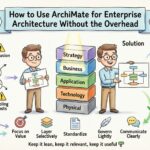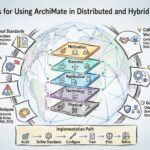


In the landscape of modern enterprise architecture, complexity is not merely a hurdle; it is the defining characteristic. As organizations scale, their digital ecosystems expand into intricate webs of services, data streams, and legacy dependencies. For senior architects, the primary objective is not just to build systems, but to ensure these systems align with business goals, remain adaptable to change, and communicate effectively across diverse stakeholder groups. When the stakes are high and the systems are vast, a standardized modeling language becomes essential for clarity and precision.
The Challenge of Modern System Architecture 🧩
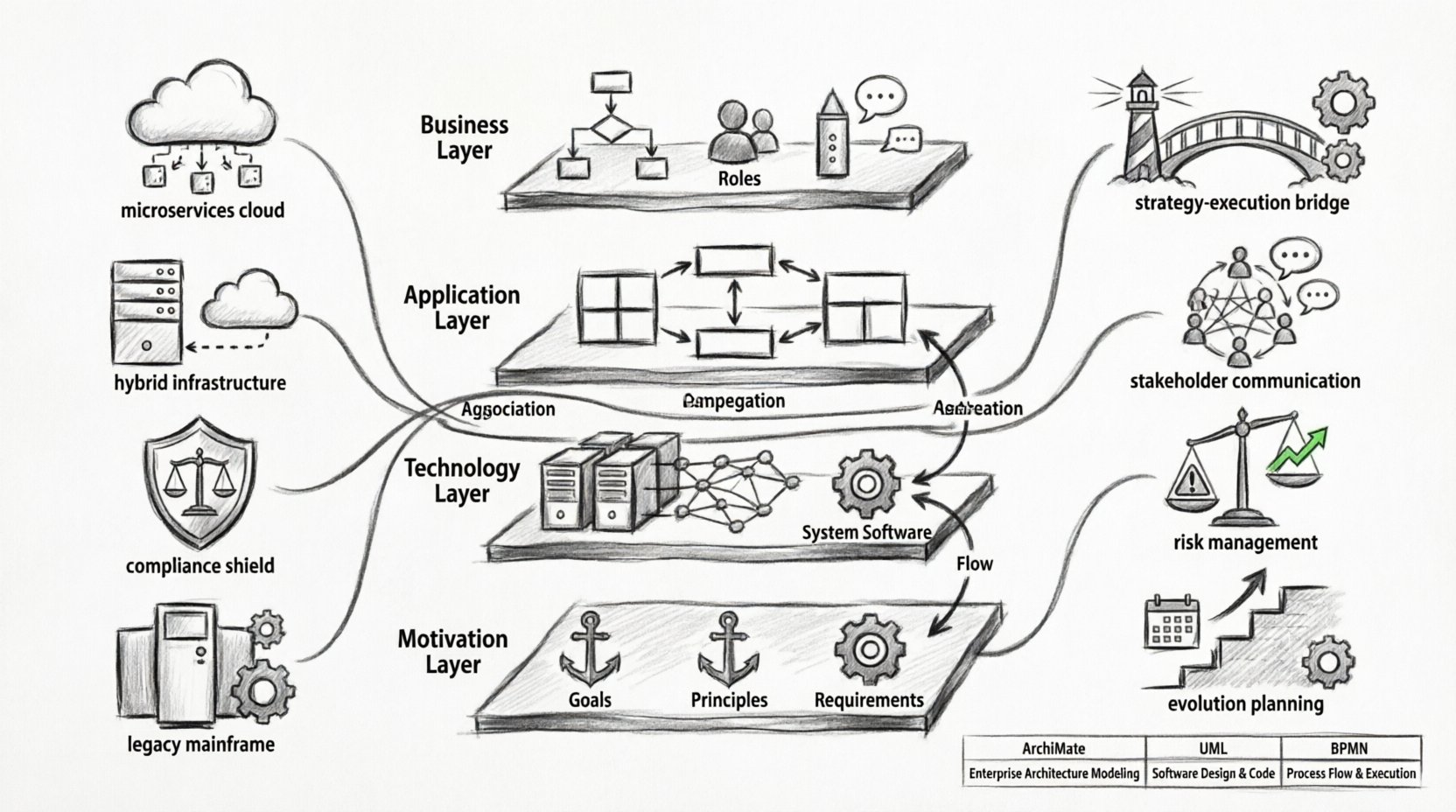
Contemporary infrastructure is rarely a monolith. It is a distributed environment comprising microservices, hybrid cloud resources, and on-premise hardware. This heterogeneity introduces significant challenges in design and maintenance. Senior architects face the burden of maintaining a coherent view of the entire organization while managing granular technical details. Without a common language, communication breakdowns occur between business leaders and technical teams.
Key challenges include:
- Distributed Microservices: Managing hundreds of independent services requires a clear map of dependencies.
- Hybrid Cloud Environments: Balancing on-premise legacy systems with modern cloud-native solutions creates friction.
- Regulatory Compliance: Ensuring data governance and security standards are met across all layers.
- Legacy Integration: Connecting modern applications with decades-old mainframe systems.
These issues necessitate a robust framework that can abstract complexity without losing critical detail. A standardized notation provides this bridge, allowing architects to model the organization holistically.
Defining the Framework 📐
ArchiMate is a modeling language designed specifically for Enterprise Architecture. It provides a structured approach to describing, analyzing, and visualizing the relationships between business, application, and technology layers. Unlike general-purpose modeling languages, ArchiMate is tailored to the specific needs of enterprise design, offering concepts that map directly to organizational realities.
The standard is maintained by The Open Group, ensuring it remains an open specification rather than a proprietary tool. This openness allows organizations to adopt it without vendor lock-in. The language is designed to be interoperable with other frameworks, such as TOGAF, allowing for seamless integration into existing governance structures.
Core characteristics of the framework include:
- Standardization: A shared vocabulary understood by all stakeholders.
- Modularity: Distinct layers allow architects to focus on specific domains.
- Traceability: Clear lines of reasoning from business strategy to technical implementation.
- Flexibility: Applicable to strategy, business, information, and technical architecture.
Structural Clarity Through Layers 🧱
One of the primary reasons senior architects favor this language is its layered structure. This approach prevents the model from becoming an unmanageable tangle of information. By separating concerns, architects can maintain distinct views for different audiences.
The Business Layer
This layer represents the business structure, processes, and goals. It includes concepts such as business actors, roles, and business functions. It answers the question: “What does the organization do?”
- Business Process: A set of activities that produce a specific result.
- Business Service: A visible representation of the capability of a business function.
- Business Role: A unit of the business organization that plays a specific role.
The Application Layer
The application layer focuses on the software systems that support the business processes. It bridges the gap between business logic and technical infrastructure.
- Application Component: A modular unit of software that provides functionality.
- Application Interface: A point of interaction between the application and other components.
- Application Service: A logical function provided by an application.
The Technology Layer
This layer describes the hardware and software infrastructure required to run the applications. It is the foundation upon which the digital ecosystem rests.
- Device: Hardware resources like servers or endpoints.
- Network: Communication paths connecting devices.
- System Software: Operating systems and middleware.
The Motivation Layer
A unique feature of this framework is the motivation layer. It captures the drivers behind the architectural decisions, such as goals, principles, and requirements. This ensures that every technical component can be traced back to a business value.
- Goal: Something to be achieved.
- Principle: A rule or guideline for decision-making.
- Requirement: A constraint or need that must be satisfied.
Relationships and Connectors 🔗
Models are only useful if they show how things interact. This language defines specific relationship types that clarify dependencies and flows. Understanding these connectors is vital for impact analysis and change management.
Common relationship types include:
- Association: A non-directional relationship between two elements.
- Aggregation: A “whole-part” relationship where the part can exist without the whole.
- Composition: A strong “whole-part” relationship where the part cannot exist without the whole.
- Realization: Indicates that one element implements or realizes another.
- Flow: Shows the movement of data or control between elements.
These relationships allow architects to perform rigorous analysis. For example, if a specific application component is removed, the realization relationships show which business processes will be impacted. This visibility is critical for risk mitigation.
Bridging the Gap Between Strategy and Execution 🎯
Senior architects often struggle with the disconnect between high-level strategy and low-level implementation. This language excels at linking these two extremes. By modeling business capabilities and mapping them to applications and technology, architects ensure that IT investments directly support business objectives.
Key alignment mechanisms include:
- Business Capability Mapping: Identifying what the business needs to do versus what IT provides.
- Value Stream Modeling: Visualizing how value is delivered to the customer.
- Gap Analysis: Comparing the current state with the target state to identify missing capabilities.
This alignment reduces waste. Projects are no longer initiated based on technology trends but on verified business needs. It ensures that every line of code serves a strategic purpose.
Communication Across Disciplines 🤝
One of the most significant benefits of this standard is its ability to facilitate communication. Different stakeholders speak different languages. Executives care about value and risk. Engineers care about code and infrastructure. This language provides a common visual syntax that translates between these worlds.
- Visual Language: Diagrams reduce the need for lengthy textual descriptions.
- Reducing Ambiguity: Standard definitions eliminate interpretation errors.
- Stakeholder Alignment: All parties can see the same model and agree on the architecture.
When a diagram is created using this notation, a business analyst can read the business layer while a system architect reads the technology layer. The relationships between them remain clear. This shared understanding accelerates decision-making and reduces the time spent in meetings clarifying requirements.
Comparison with Alternative Modeling Methods 📊
While other modeling standards exist, such as UML or BPMN, this language is purpose-built for Enterprise Architecture. The table below highlights the key differences.
| Feature | ArchiMate | UML | BPMN |
|---|---|---|---|
| Primary Focus | Enterprise Architecture | Software Design | Business Process Modeling |
| Layer Support | Business, App, Tech | Software Components | Process Flows |
| Strategy Link | Strong (Motivation Layer) | Weak | Moderate |
| Stakeholder Audience | Executives & Architects | Developers | Business Analysts |
| Interoperability | High | Medium | High |
This comparison illustrates why senior architects prefer this language for complex system design. It covers the breadth of the enterprise, whereas other tools may focus on specific technical or process aspects.
Managing Technical Debt and Risk 🛡️
As systems age, technical debt accumulates. Without a clear map of the architecture, it is difficult to identify where debt resides. This framework allows architects to tag elements with attributes that indicate technical debt or risk levels. By visualizing these elements, teams can prioritize refactoring efforts.
- Impact Analysis: Understanding the ripple effect of changes.
- Change Management: Controlling the evolution of the architecture.
- Compliance: Ensuring adherence to security and regulatory standards.
When a change request is submitted, the model can be queried to show all dependent elements. This prevents accidental breakage of critical business functions. It transforms change management from a reactive process into a proactive strategy.
Long-Term Sustainability and Evolution 🔄
Architecture is not static. It must evolve as the business changes. This language supports versioning and evolution planning. Architects can maintain a history of changes, allowing them to review how the architecture has shifted over time.
- Versioning: Tracking changes to the model over time.
- Evolution Planning: Defining the path from current state to target state.
- Reuse of Models: Applying patterns from one project to another.
This long-term view ensures that the architecture remains relevant. It prevents the “big bang” migrations that often fail. Instead, organizations can adopt a phased approach, validating each step against the target model. This reduces risk and increases the likelihood of successful delivery.
Conclusion on Architectural Governance 🏛️
For senior architects, the choice of modeling language is a strategic decision. It impacts how effectively they can govern the enterprise’s digital assets. A standardized language like ArchiMate provides the necessary structure to manage complexity, align strategy with execution, and facilitate clear communication.
By adopting this framework, organizations gain:
- Clarity: A single source of truth for the architecture.
- Alignment: IT projects that support business goals.
- Efficiency: Reduced communication overhead and faster decision-making.
- Risk Reduction: Better visibility into dependencies and impacts.
In an era where digital transformation is continuous, having a robust method for designing complex systems is not optional. It is a requirement for sustainable growth and operational excellence. Senior architects choose this standard because it delivers the precision and flexibility needed to navigate the future of enterprise architecture.