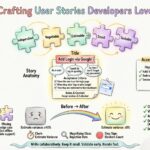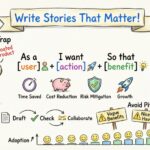


In the world of software development and product management, few phrases are as ubiquitous as the standard user story template. You see it on digital boards, printed on sticky notes, and recited during sprint planning sessions. The phrase is simple: “As a [role], I want [feature], so that [benefit].”
It promises clarity. It promises alignment. It promises to keep the team focused on value. However, experience shows that relying on this template as a rigid rule often leads to confusion, wasted effort, and features that miss the mark. This guide explores why this specific format can hinder progress and what alternatives teams can adopt to drive better outcomes.
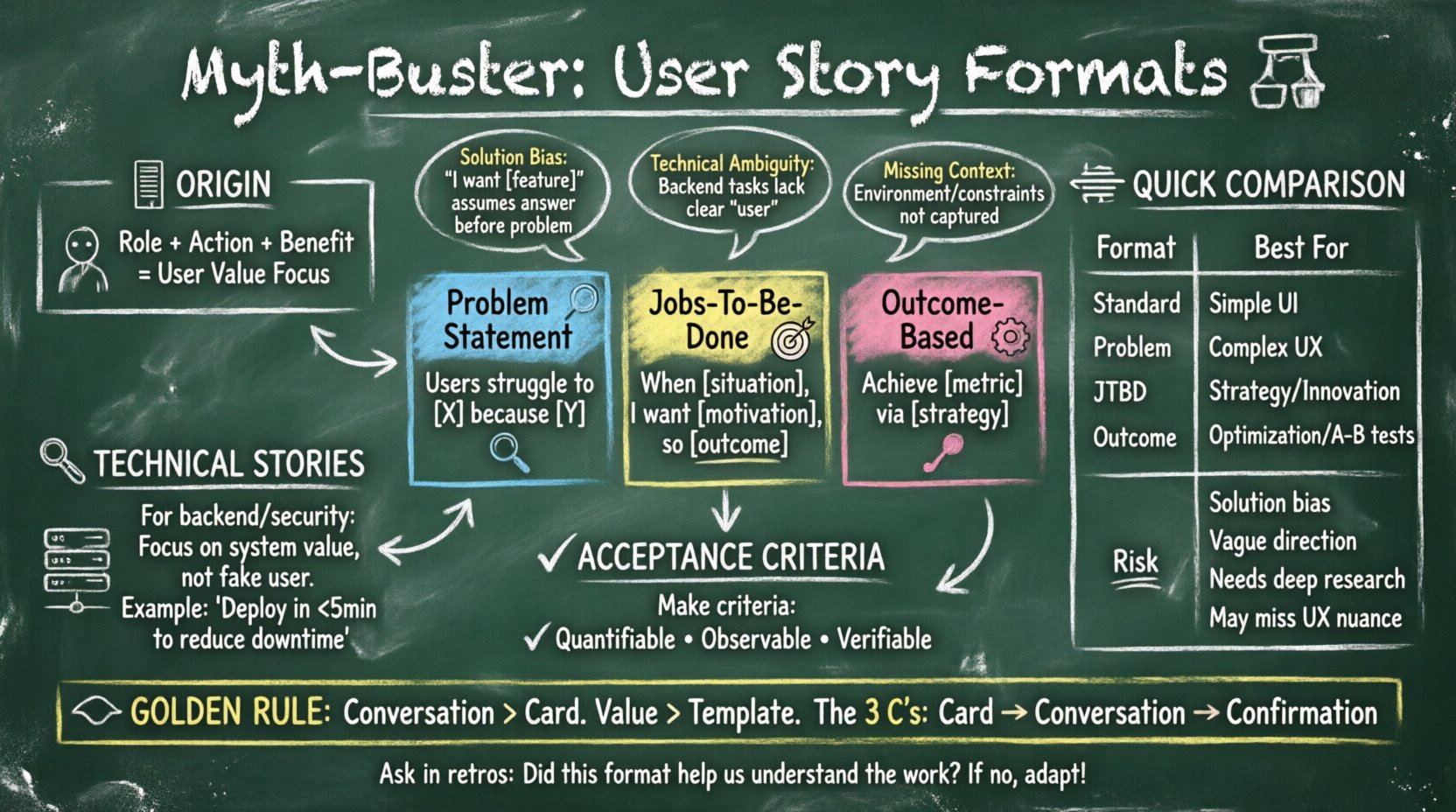
The Origin and Intent of the Format 📜
To understand why a template might fail, we must first understand why it succeeded. This structure emerged during the early days of Agile methodologies. The goal was to shift focus from technical specifications to user value. Before this shift, requirements were often long, static documents that developers read without context.
The standard format introduced three critical elements:
- Role: Identifies who is benefiting from the work.
- Action: Describes what the user wants to do.
- Benefit: Explains the value behind the action.
For web applications with clear interfaces, this worked well. It forced product owners to think about the person on the other side of the screen. It prevented developers from building features based on assumptions. However, the context of software development has evolved significantly since those early days.
Where the Standard Format Fails ⚠️
While the template is a useful starting point, it is not a universal solution. In complex environments, the rigid adherence to “As a user…” can obscure the actual problem. Below are the primary areas where this format struggles.
1. Solution Bias
The structure often implies a solution before the problem is fully understood. By saying “I want [feature],” the writer assumes the feature is the correct path. This closes off alternative approaches that might solve the underlying issue more effectively.
- Scenario: A team writes, “As a user, I want a search bar.”
- Reality: The user might not need a search bar; they might need a better navigation menu.
- Result: The team builds the search bar, but the user is still lost.
2. Ambiguity in Technical Contexts
Not every piece of work has a direct human user. System-to-system integrations, database migrations, and security patches often lack a clear “user.” Forcing a human role onto a backend process can create confusion.
- Bad Example: “As a user, I want the database to be optimized.” (Who is the user? The database?)
- Good Example: “As an API, I need to handle 10,000 requests per minute to ensure stability.”
3. Lack of Context
The template focuses on the transaction. It does not always capture the environment or the constraints. A feature that works in a controlled environment might fail in the real world if the context is missing.
Alternative Approaches for Requirement Gathering 🔄
Teams can adopt different structures to capture requirements more effectively. These alternatives shift the focus from the template to the value and the problem.
Problem Statements
This approach flips the script. Instead of a solution, it defines the pain point. It asks the team to articulate the struggle before proposing the fix.
Format: “Users struggle to [action] because [reason].”
Benefits:
- Encourages deep empathy with the end user.
- Keeps the focus on the root cause.
- Allows multiple solution paths to be considered.
Example: “Users struggle to find their order history because the menu is cluttered and lacks hierarchy.”
Jobs to Be Done (JTBD)
This framework focuses on progress. Users “hire” products to make progress in their lives. It separates the job from the product.
Format: “When [situation], I want to [motivation], so that [expected outcome].”
Benefits:
- Highlights the underlying need rather than the feature.
- Reduces feature creep by focusing on the job.
- Aligns closely with business goals and user motivation.
Example: “When I am commuting, I want to listen to news, so that I stay informed without distraction.”
Outcome-Based Descriptions
This method focuses on the measurable change in the system or user behavior. It is particularly useful for experimentation and optimization.
Format: “We need to achieve [metric] by implementing [strategy].”
Example: “We need to reduce checkout abandonment by 15% by simplifying the payment form fields.”
Comparison of Formats 📊
Understanding the differences helps teams choose the right tool for the job. The table below outlines how different formats address specific needs.
| Format | Focus | Best Used For | Risk |
|---|---|---|---|
| Standard User Story | Role + Action + Benefit | Simple UI features, clear user flows | Solution bias, ignores technical needs |
| Problem Statement | Pain Point + Context | Complex UX issues, research-heavy tasks | May lack clear solution direction |
| JTBD | Motivation + Outcome | Strategic initiatives, innovation | Requires deep user understanding |
| Outcome-Based | Metrics + Strategy | Optimization, A/B testing, backend goals | May overlook user experience nuances |
Technical and Non-Functional Stories 🛠️
Software development involves more than just user-facing features. Technical debt, security compliance, and infrastructure changes are critical to long-term success. Using a user-centric template for these items often feels forced.
Infrastructure and Maintenance
When updating a server or refactoring code, the “user” is often the system itself or the operations team. The value is stability, speed, or cost reduction.
- Instead of: “As a user, I want the server to be faster.”
- Use: “The deployment process needs to complete in under 5 minutes to reduce downtime costs.”
Security and Compliance
Security stories are often mandatory. They are about risk reduction rather than user desire. Framing them as user wants can minimize their importance.
- Instead of: “As a user, I want my data to be safe.”
- Use: “The system must encrypt data at rest to meet regulatory requirements and prevent breaches.”
The Role of Acceptance Criteria ✅
Regardless of the story format, acceptance criteria are vital. They define when the work is complete. They should be testable, specific, and unambiguous. Poor criteria lead to rework and disputes.
Common Mistakes in Criteria
- Subjective Language: Using terms like “user-friendly” or “fast” without definition.
- Unmeasurable Goals: Saying “ensure high quality” without a metric.
- Vague Actions: Using “check” or “verify” without specifying how.
Effective Criteria
- Quantifiable: “The page loads in under 2 seconds on 4G networks.”
- Observable: “The error message appears in red text at the top of the form.”
- Verifiable: “The user can submit the form without validation errors when all fields are filled.”
Collaboration Over Documentation 🤝
The format is less important than the conversation. A story is a placeholder for a discussion. If the discussion happens, the format matters less. If the discussion does not happen, the format does not save the team.
The Three C’s of Agile
Stories follow the pattern of Card, Conversation, and Confirmation.
- Card: The written note or ticket.
- Conversation: The dialogue between stakeholders and builders.
- Confirmation: The acceptance criteria and testing.
Teams often focus too much on the Card and neglect the Conversation. A well-written story that is never discussed is useless. A messy story that is thoroughly discussed is valuable.
When to Use the Standard Format 🎯
There are times when the standard template works well. It is not about banning the format, but using it appropriately.
- Simple CRUD Operations: Creating, reading, updating, and deleting data is straightforward.
- UI Updates: When the user interface change is clear and direct.
- Onboarding: Helping new team members understand the flow.
If the team is new to Agile, the standard format provides a helpful scaffold. It gives them a starting point to learn how to think about value.
When to Avoid the Standard Format 🚫
Conversely, there are scenarios where the template adds friction.
- Backend Architecture Changes: No direct user interaction.
- Data Migration Tasks: The value is in data integrity, not user action.
- Security Compliance Requirements: The value is risk mitigation.
- Research and Discovery: The goal is learning, not shipping a feature.
Impact on Quality and Delivery 📉
Using the wrong format impacts delivery quality. When the story does not accurately reflect the need, the team builds the wrong thing. This leads to wasted cycles.
- Developers: May build the feature but miss the intent.
- Testers: May verify the feature but miss the value.
- Stakeholders: May feel unheard if the output does not solve the problem.
A shift in language leads to a shift in mindset. Teams must move from asking “How do we build this?” to “Why does this matter?”.
Continuous Improvement and Adaptation 📈
Agile is about adaptation. Rigid adherence to a template contradicts the spirit of the framework. Teams should review their practices regularly. Sprint retrospectives are the place to discuss this.
Ask these questions during review:
- Did this story help us understand the work?
- Did the format hinder or help the conversation?
- Are we solving the right problem?
If the answer is no, change the format. Build a shared library of patterns that work for your specific context.
Building a Culture of Clarity 🧠
Clarity reduces risk. It reduces rework. It increases trust. Investing time in how you write requirements pays dividends later. It is better to spend an extra hour clarifying a story than an extra day fixing a bug.
Teams should encourage experimentation. Allow members to try different formats. Share examples of successful alternative formats. Create a culture where the goal is understanding, not compliance.
Final Thoughts on Storytelling 🎤
The standard user story format is a tool, not a law. It was designed for a specific context that has since changed. While it remains useful for simple tasks, complex problems require more nuanced language.
Teams must remain flexible. They must prioritize the conversation over the card. They must focus on the value delivered, not the template filled. By moving away from rigid templates and embracing problem-based thinking, teams can build software that truly serves its users.
Remember, the goal is not to write the perfect story. The goal is to build the right product. The format is secondary to the outcome.