

Customer journey mapping is often treated as a solitary exercise, where a single team drafts a linear path based on assumptions. However, the reality of the customer experience is far more complex. It spans departments, technologies, and touchpoints that no single individual can fully control or understand in isolation. To create an accurate and actionable map, you must enable cross-functional collaboration. This process requires breaking down silos and fostering a shared language among marketing, sales, product, support, and operations.
This guide outlines a structured approach to building alignment. It focuses on practical methods to engage stakeholders, manage divergent goals, and sustain momentum without relying on specific proprietary tools. By following these steps, you can transform a fragmented view of the customer into a unified strategy that drives genuine improvement.
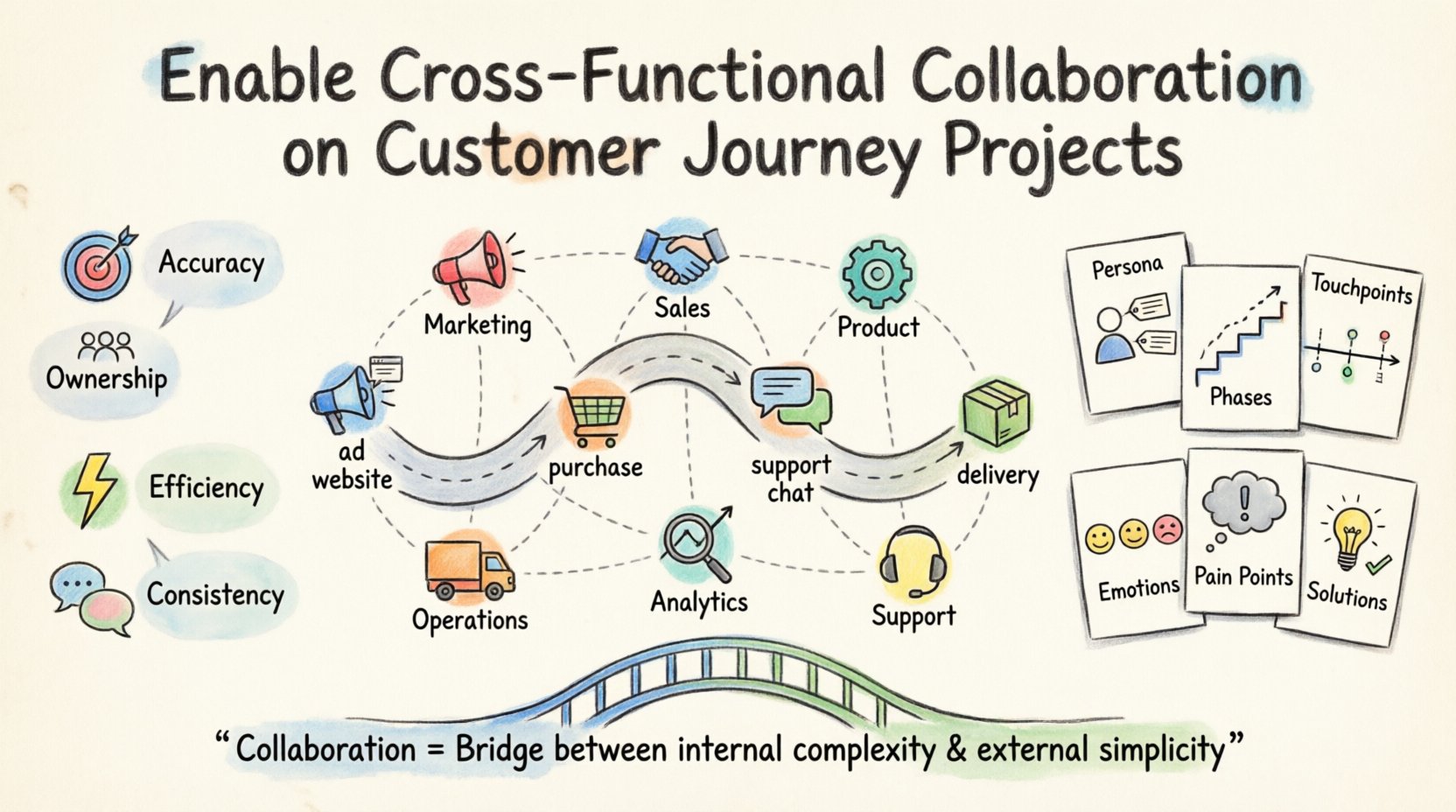
🔍 Why Collaboration Matters in Journey Mapping
When departments operate in isolation, they often optimize their specific metrics at the expense of the broader customer experience. For example, marketing might promise a fast delivery speed that operations cannot consistently meet. Sales might close deals with features that product does not yet support. These gaps create friction for the customer, eroding trust and satisfaction.
Collaboration solves this by introducing transparency. When teams see the full picture, they understand how their actions impact others. The benefits include:
- Accuracy: Different perspectives fill in the blind spots of the map. What support sees as a pain point, sales might view as a feature request.
- Ownership: When multiple teams contribute to the map, they feel responsible for the outcomes. This reduces the “throw it over the wall” mentality.
- Efficiency: Identifying friction points early prevents costly rework later in the development or implementation cycle.
- Consistency: A unified voice ensures the customer receives the same message and service level across all channels.
Without this alignment, the journey map becomes a static document that sits on a server. With collaboration, it becomes a living framework for decision-making.
👥 Identifying Key Stakeholders and Their Roles
The success of a cross-functional initiative depends on selecting the right participants. You need individuals who have a direct influence on the customer journey, not just those with a high title. Below is a breakdown of common roles and what they contribute to the process.
Core Team Members
- Customer Experience Lead: Facilitates the session and keeps the focus on the customer, not internal processes.
- Marketing Representative: Provides insights on acquisition channels, messaging, and brand expectations set during the awareness stage.
- Sales Representative: Details the negotiation process, objections handled, and promises made during the purchase phase.
- Product Manager: Explains feature limitations, roadmap priorities, and technical constraints.
- Customer Support Lead: Shares data on common complaints, resolution times, and emotional states during the retention phase.
- Operations/Logistics: Clarifies fulfillment timelines, inventory issues, and delivery logistics.
Roles and Responsibilities Matrix
| Role | Primary Focus | Key Contribution |
|---|---|---|
| Facilitator | Process Management | Ensures all voices are heard and time is managed effectively. |
| Researcher | Data Validation | Brings quantitative data and qualitative feedback to support claims. |
| Decision Maker | Resource Allocation | Authorizes changes to budget or priorities based on the map findings. |
| Subject Matter Expert | Technical Detail | Provides specific knowledge about a touchpoint or system capability. |
| Customer Advocate | User Perspective | Ensures the internal discussion remains grounded in user reality. |
Ensure that these individuals have the authority to make decisions or commit to action items. If a participant can only report back to their team after the session, the momentum will stall.
🛠️ Preparing for the Alignment Phase
Before bringing teams together, you must lay the groundwork. A lack of preparation often leads to unproductive meetings where participants argue about facts rather than solving problems.
Define the Scope Clearly
Attempting to map every single interaction across every product line is a recipe for failure. You must narrow the focus. Choose a specific journey, such as “Onboarding a New Enterprise Client” or “Resolving a Billing Dispute.” This allows for depth rather than breadth.
- Boundaries: Define the start and end points of the journey. Does it begin when they see an ad, or when they sign up?
- Goals: What is the desired outcome? Is it reducing churn, increasing upsell, or improving satisfaction scores?
- Metrics: Agree on how success will be measured before you start the work.
Gather Preliminary Data
Walk into the room with evidence. Data reduces speculation and emotional bias. Collect the following before the workshop:
- Customer interview transcripts.
- Support ticket logs and sentiment analysis.
- Analytics data regarding drop-off points.
- Internal process documentation.
When stakeholders see data that contradicts their assumptions, it opens the door for constructive dialogue. It shifts the conversation from “I think” to “The data shows.”
🤝 Facilitating the Mapping Workshop
The workshop is the engine of collaboration. It is where the map is built, but more importantly, where the shared understanding is forged. The facilitator plays a critical role in maintaining neutrality and driving progress.
Establish Ground Rules
Set expectations immediately. Participants need to know that this is a safe space for honest feedback. Without psychological safety, people will withhold information to protect their departments.
- Listen to Understand: Avoid interrupting. Focus on grasping the other perspective.
- One Conversation: No side conversations or device distractions.
- Assume Positive Intent: Every department wants the customer to succeed, even if their methods differ.
- Defer Judgment: Do not critique ideas during the generation phase.
Step-by-Step Mapping Process
Follow a logical flow to ensure all touchpoints are covered without getting stuck on details.
- Define the Persona: Agree on who this journey represents. Create a name and profile for this specific user type.
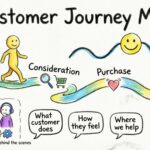
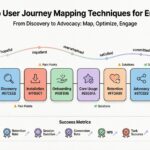
- Identify Phases: Map the high-level stages (e.g., Awareness, Consideration, Purchase, Usage, Support).
- Fill in Touchpoints: For each stage, list every interaction the customer has. This includes emails, calls, website clicks, and physical visits.
- Map Emotional States: Ask participants how the customer feels at each point. Are they frustrated, excited, confused?
- Highlight Pain Points: Mark areas where friction occurs. These are the opportunities for improvement.
- Identify Opportunities: Brainstorm solutions for each pain point.
Managing Time and Attention
Workshops often drift. Keep the group focused by using timeboxes for each section. If a debate arises that cannot be resolved in the moment, park it on a “Parking Lot” list to discuss offline. This keeps the main session moving.
⚖️ Navigating Conflict and Divergent Goals
Different departments have different Key Performance Indicators (KPIs). Sales wants speed; Support wants thoroughness. Product wants stability; Marketing wants new features. These conflicting goals are the primary source of friction during collaboration.
Aligning on the Customer Goal
When conflict arises, bring the conversation back to the customer. Ask, “What does the customer need to succeed here?” This externalizes the problem. It is no longer Sales vs. Support; it is the Team vs. The Customer Challenge.
- Reframe Metrics: Instead of measuring only departmental efficiency, introduce shared metrics like Customer Effort Score (CES) or Net Promoter Score (NPS).
- Trade-offs: Acknowledge that improvements in one area may cost resources in another. Discuss these trade-offs openly to reach a compromise.
Handling Resistance
Some stakeholders may resist the process, fearing it will expose inefficiencies in their team. Address this by framing the map as a tool for advocacy, not policing.
- Empowerment: Show how the map helps them secure resources or justify changes to their leadership.
- Transparency: Assure them that the process is collaborative, not an audit of their performance.
- Quick Wins: Identify low-hanging fruit that can be solved quickly to build trust in the process.
📄 Documentation and Knowledge Management
A journey map is useless if it is not accessible. You need a system to store the artifacts, decisions, and action items generated during the collaboration. This ensures continuity when team members rotate or new projects begin.
Centralized Storage
Use a shared repository where all stakeholders can access the current version of the map. Avoid sending static images via email, as they become outdated quickly.
- Version Control: Ensure there is a clear history of changes. Note who updated what and when.
- Accessibility: Ensure the file format is editable by the team but protected from accidental deletion.
- Searchability: Tags and metadata should allow users to find specific journey stages or issues easily.
Linking to Action Items
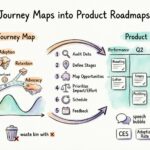
The map must connect to the work. Every pain point identified should ideally have an associated task or initiative.
- Traceability: Click on a pain point and see the related project or ticket.
- Status Tracking: Mark action items as Open, In Progress, or Resolved.
- Impact Reporting: Periodically review if the actions taken actually improved the customer experience metrics.
🚀 Sustaining Collaboration Post-Mapping
The workshop is not the end of the process. It is the beginning of a cycle of continuous improvement. Without follow-through, the collaboration effort is wasted.
Regular Check-ins
Schedule recurring meetings to review the journey map. These should be brief, focused updates rather than long strategy sessions.
- Frequency: Monthly or quarterly reviews are usually sufficient.
- Agenda: Review progress on action items, discuss new customer feedback, and update the map if the process changes.
- Attendance: Invite the same core group to maintain institutional knowledge.
Feedback Loops
Keep the customer voice in the loop. Share updates with the customer-facing teams so they know what changes are coming.
- Internal Communication: Send newsletters or updates to the wider organization about journey improvements.
- Customer Feedback: Continue collecting data to validate if the changes are working.
Cross-Training
Encourage team members to understand the roles of others. A marketer sitting in on a support call, or a developer shadowing a sales meeting, builds empathy.
- Job Shadowing: Arrange short periods where employees observe another department.
- Shared Documentation: Rotate the ownership of the journey map document to different team members.
📊 Measuring the Impact of Collaboration
How do you know if the cross-functional effort is working? You need to measure the health of the collaboration itself, not just the customer outcomes.
Internal Metrics
- Participation Rate: Are stakeholders attending meetings and contributing?
- Action Item Completion: What percentage of identified tasks are finished on time?
- Communication Quality: Are teams communicating proactively or reactively?
Customer Metrics
- Resolution Time: Has the time to resolve issues decreased due to better alignment?
- Customer Satisfaction: Are CSAT scores improving across touchpoints?
- Retention: Is the churn rate reducing for the specific journey segment?
🌟 Conclusion
Building a customer journey map is a technical exercise, but enabling the collaboration around it is a human one. It requires patience, empathy, and a willingness to confront uncomfortable truths about how your organization operates. By bringing diverse perspectives together, you create a more robust strategy that withstands the complexity of modern customer expectations.
The goal is not perfection. The goal is progress. Every time you align a department, you remove a barrier for the customer. Over time, these small alignments compound into a seamless experience. Start with the right stakeholders, prepare thoroughly, facilitate openly, and document rigorously. This disciplined approach ensures that your journey map becomes a catalyst for real organizational change rather than just a visual artifact.
Remember, the customer does not care about your internal structure. They care about the outcome. Your job is to align your internal structure to deliver that outcome efficiently. Collaboration is the bridge between your internal complexity and external simplicity.