

Customer journey mapping (CJM) is a strategic asset that aligns internal teams with external customer needs. However, the creation of a map is only the beginning. The true value emerges when stakeholders across the organization embrace the insights and commit to the necessary changes. Without broad support, even the most detailed maps gather dust. This guide outlines the practical steps to secure agreement, foster engagement, and drive action from key decision-makers.
🧐 Understanding the Stakeholder Landscape
Before presenting your case, you must understand who holds influence over the initiative. Different roles care about different outcomes. A generic approach often fails because it does not address specific concerns. You need to map your stakeholders against their motivations.
Identifying Key Roles
Stakeholders typically fall into specific categories. Each requires a tailored message to resonate effectively.
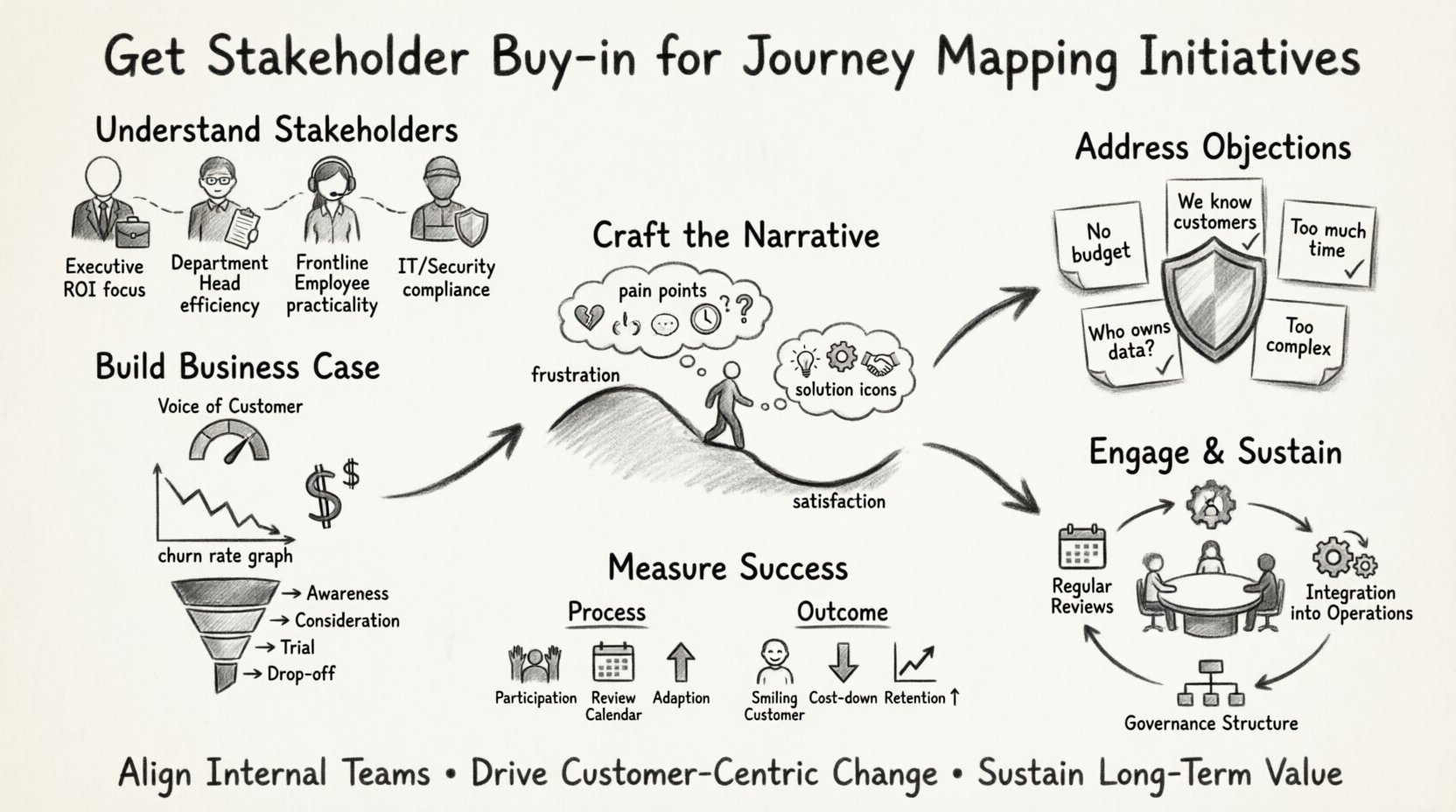
- Executive Leadership: Focus on ROI, risk mitigation, and strategic alignment. They need to see the financial impact.
- Department Heads: Focus on operational efficiency, resource allocation, and team workload. They care about feasibility.
- Frontline Employees: Focus on daily tasks, customer interaction ease, and tools. They care about practicality.
- IT and Security: Focus on data integrity, compliance, and system integration. They care about technical constraints.
When you know who these people are, you can anticipate their questions before you even open a presentation.
📊 Building the Business Case
Support is often tied to perceived value. If stakeholders cannot see the benefit, they will not allocate resources. You must build a case grounded in evidence, not intuition. Data serves as the common language that bridges departmental silos.
Gathering Relevant Data
Use existing data to highlight gaps in the current experience. Do not rely on anecdotes. Quantify the problem.
- Customer Feedback: Collect Voice of Customer (VoC) data, including Net Promoter Score (NPS) and Customer Effort Score (CES).
- Operational Metrics: Analyze churn rates, repeat purchase frequency, and average handling time.
- Financial Data: Estimate the cost of acquiring a new customer versus retaining an existing one.
- Process Bottlenecks: Identify where customers drop off during digital or physical interactions.
When you present these numbers, you are not just describing a problem; you are showing a quantifiable opportunity for improvement.
🗣️ Crafting the Narrative
Numbers alone do not inspire action. Humans respond to stories. A journey map is essentially a narrative tool. You must translate raw data into a compelling story about the customer.
Storytelling Techniques
- Use Personas: Create archetypal customers that represent different segments. Give them names and goals to humanize the data.
- Visualize the Emotion: Map not just actions, but feelings. Show frustration peaks and satisfaction valleys.
- Focus on Pain Points: Highlight specific moments where the customer feels unsupported. This creates urgency.
- Propose Solutions: Do not just present problems. Offer clear pathways to resolution.
By framing the journey map as a story about the customer, you shift the focus from internal politics to external value. This reduces defensiveness and encourages collaboration.
🛡️ Addressing Common Objections
Resistance is natural. Stakeholders may worry about cost, time, or relevance. Prepare clear responses to these concerns. Below is a matrix of common objections and how to address them.
| Objection | Underlying Concern | Strategic Response |
|---|---|---|
| “We do not have the budget.” | Financial risk | Show the cost of inaction. Calculate the revenue lost due to poor experiences. |
| “We already know our customers.” | Complacency | Present fresh data that contradicts internal assumptions. Highlight gaps in knowledge. |
| “This will take too much time.” | Resource constraints | Propose a phased approach. Start with a pilot to demonstrate value before scaling. |
| “Who owns this data?” | Ambiguity | Define clear ownership and governance. Assign a champion for each journey stage. |
| “It is too complex to implement.” | Feasibility | Break down changes into small, manageable wins. Prioritize high-impact, low-effort fixes. |
By anticipating these hurdles, you demonstrate preparedness. This builds trust and shows that you understand the business context.
🤝 Engagement Strategies
Securing buy-in is not a one-time event; it is a process. You must keep stakeholders involved throughout the lifecycle of the initiative. Passive approval is not enough. Active participation leads to ownership.
Workshops and Collaborative Sessions
Invite stakeholders to co-create the journey maps. This serves multiple purposes:
- Validation: Ensure the map reflects reality.
- Education: Teach stakeholders about customer-centric thinking.
- Commitment: People support what they help create.
During these sessions, facilitate discussions rather than dictating outcomes. Ask open-ended questions like, “How would this impact your team?” or “What resources would be needed to fix this?”
Regular Reporting and Updates
Maintain momentum by sharing progress. Stakeholders need to see that the initiative is moving forward. Establish a rhythm for updates.
- Monthly Reviews: Share key metrics and progress against goals.
- Success Stories: Highlight specific customer improvements resulting from changes.
- Challenges: Be transparent about obstacles. This builds credibility.
🔄 Sustaining Long-Term Commitment
Once the initial approval is granted, the work is not done. You must ensure that the journey mapping initiative becomes part of the organizational culture. This requires embedding the practice into existing workflows.
Integrating into Operations
Do not treat journey mapping as a separate project. Integrate it into standard operating procedures.
- Onboarding: Include journey insights in new employee training.
- Performance Reviews: Tie customer experience metrics to individual performance goals.
- Product Development: Use journey maps to guide feature prioritization and roadmap planning.
When the map influences daily decisions, it becomes a living document rather than a static artifact.
Establishing Governance
Assign responsibility for maintaining the accuracy of the maps. Create a governance model that defines how often maps should be reviewed and updated.
- Review Cadence: Schedule quarterly or bi-annual reviews.
- Change Management: Define a process for updating maps when business processes change.
- Feedback Loops: Create channels for frontline staff to suggest updates based on customer interactions.
This structure ensures that the initiative remains relevant and continues to drive value over time.
📈 Measuring Success
Finally, you must measure the impact of the stakeholder buy-in. Did their support lead to tangible results? Track both process metrics and outcome metrics.
Process Metrics
- Number of stakeholders actively participating in workshops.
- Frequency of journey map reviews.
- Adoption rate of recommended changes.
Outcome Metrics
- Improvement in customer satisfaction scores.
- Reduction in operational costs due to efficiency gains.
- Increase in customer retention rates.
Reporting these results reinforces the value of the initiative. It justifies continued investment and encourages stakeholders to champion the program to their peers.
🚀 Moving Forward
Securing stakeholder buy-in for customer journey mapping requires a blend of data, storytelling, and relationship building. It is about aligning internal capabilities with external expectations. By understanding your audience, building a solid business case, and engaging stakeholders actively, you create a foundation for sustainable change. The journey map becomes a shared vision, driving the organization toward better customer experiences and stronger business performance.
Start by identifying your key influencers. Prepare your data. Listen to their concerns. Present the story. Follow through on commitments. With patience and persistence, you can turn skepticism into support and drive meaningful transformation across the enterprise.