

The initial interaction between a user and a software platform sets the tone for the entire relationship. In the competitive landscape of business applications, the difference between a loyal subscriber and a churned account often happens within the first few weeks. This critical period is known as onboarding, and its effectiveness relies heavily on a structured approach known as journey mapping. By visualizing the path a customer takes from awareness to value realization, organizations can identify friction points and optimize the experience. This guide explores how to build a robust SaaS onboarding journey map designed specifically for retention.
🧠 Understanding the Connection Between Journey Mapping and Retention
Journey mapping is not merely a diagram; it is a strategic tool that aligns internal teams around the user’s perspective. When applied to onboarding, it shifts the focus from what the platform can do to what the customer needs to achieve. Retention is not an accident. It is the result of consistent value delivery. If a user does not understand how to solve their problem using the application, they will leave. Mapping the journey allows teams to anticipate questions, reduce cognitive load, and guide users toward their first “aha” moment.
Key reasons why this strategy matters include:
- Clarity of Purpose: Users understand exactly what steps they need to take to succeed.
- Reduced Friction: Identifying and removing roadblocks before they cause drop-offs.
- Data-Driven Decisions: Every touchpoint is measurable, allowing for continuous improvement.
- Alignment: Marketing, sales, and support teams speak the same language regarding customer expectations.
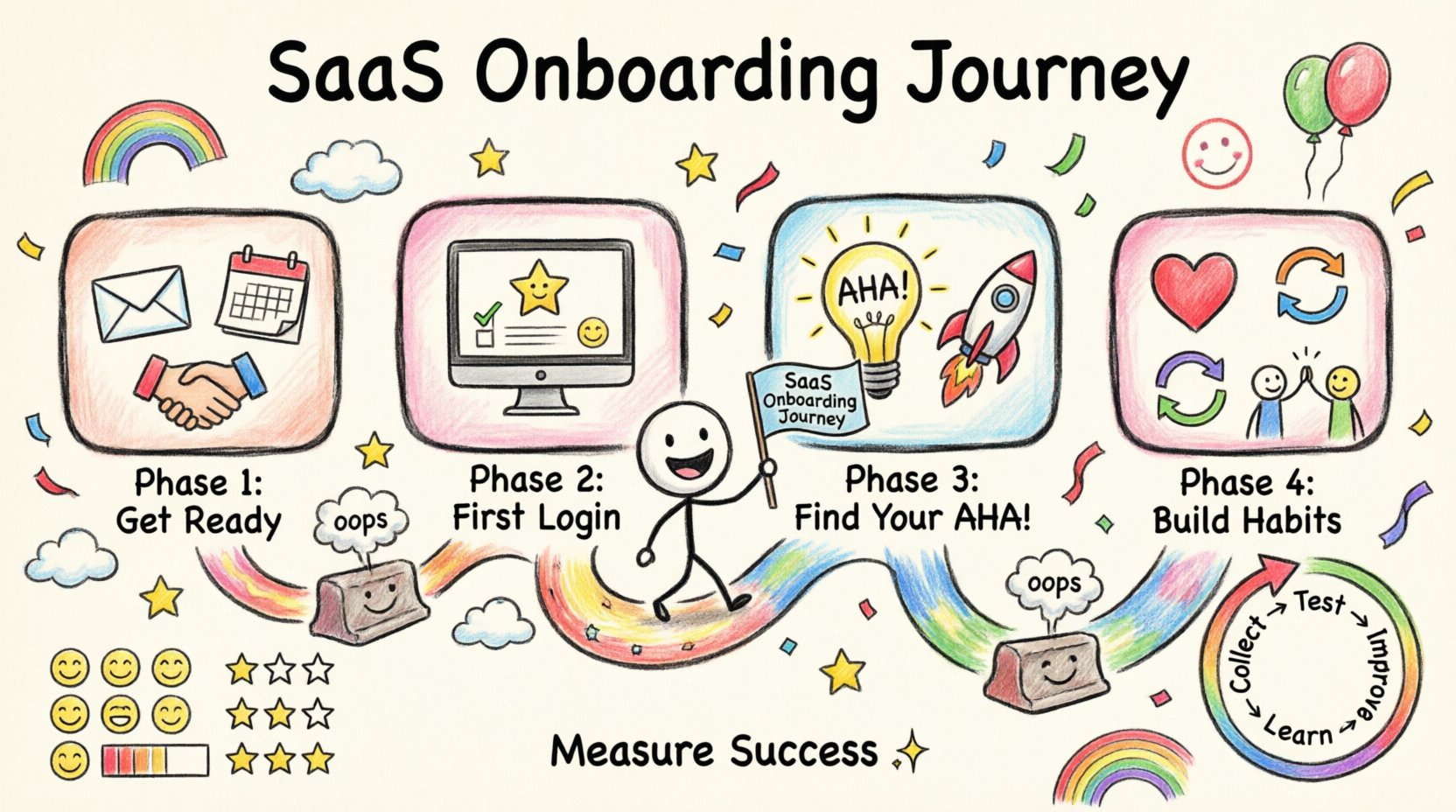
🗺️ Phase 1: Pre-Onboarding Expectations
Onboarding begins before the user logs in. It starts when they sign the contract or complete the trial registration. Managing expectations during this phase is crucial for preventing early churn. If the reality of the product does not match the promise made during sales, the user will feel misled.
Setting the Right Foundation
During this stage, the focus is on communication and preparation. Users need to know what is coming next. They need access to necessary credentials and initial setup guides. A clear timeline helps manage anxiety and builds confidence in the purchase decision.
- Confirmation Emails: Ensure immediate acknowledgment of sign-up with clear next steps.
- Resource Access: Provide links to documentation or video tutorials before the first login.
- Human Touch: Offer a scheduled call or demo if the implementation is complex.
- Goal Setting: Ask the user what they hope to achieve in the first 30 days.
🔑 Phase 2: The First Login Experience
The moment a user enters the system is high-risk. This is where the “Time-to-Value” clock starts ticking. A cluttered interface or a confusing dashboard can lead to immediate abandonment. The goal here is simplicity and guidance. The interface should highlight the most important actions without overwhelming the user with every available feature.
Designing the Welcome Flow
Guided tours and checklists are effective tools during this phase. They break down complex processes into manageable tasks. Users feel a sense of progress as they complete milestones. It is important not to show all features at once. Instead, reveal functionality as it becomes relevant to their workflow.
- Progress Indicators: Show users how far along they are in their setup.
- Contextual Help: Provide tooltips that explain specific features when hovered over.
- Minimalist Dashboard: Focus on key metrics relevant to their role.
- Immediate Wins: Configure the system to deliver a small result quickly.
🚀 Phase 3: Time-to-Value Acceleration
This is the core of the onboarding journey. It is the period where the user transitions from setting up the tool to actually using it for business outcomes. The objective is to reduce the gap between sign-up and the first significant achievement. If this gap is too long, motivation wanes.
Identifying the “Aha” Moment
Every platform has a specific action that demonstrates its core value. For a project management tool, this might be creating a task. For a communication app, it might be sending the first message. Mapping this journey requires deep analysis of user behavior data to find the most common path to success. Once identified, the path to this action must be optimized.
| Stage | Goal | Key Action |
|---|---|---|
| Discovery | Understand the problem | Search for solutions |
| Onboarding | Set up the solution | Complete profile setup |
| Activation | Experience core value | Execute primary function |
| Retention | Integrate into workflow | Use feature regularly |
Strategies to accelerate this phase include:
- Segmented Onboarding: Tailor the experience based on user roles or industries.
- Automated Emails: Send triggers based on user inactivity or completion of tasks.
- In-App Messaging: Engage users directly within the interface for real-time support.
- Success Criteria: Define what “success” looks like for the user and track it.
🔄 Phase 4: Habit Formation & Engagement
Once the user achieves their first win, the focus shifts to consistency. Retention is about habit formation. The platform must become a part of their daily or weekly routine. This phase requires a different set of tactics focused on engagement and continued learning. Users need to discover deeper features that solve more complex problems.
Sustaining Interest
It is easy for users to drift away after the initial excitement fades. To maintain engagement, the system should provide ongoing value. Regular updates, new feature announcements, and educational content keep the platform fresh. Community building can also play a role, allowing users to share tips and tricks.
- Feature Discovery: Introduce advanced capabilities gradually.
- Newsletters: Share case studies and best practices from other users.
- Feedback Loops: Regularly ask for input to show users their voice matters.
- Re-engagement Campaigns: Reach out to users who have become inactive.
📊 Measuring Success: Key Metrics
To improve the journey, you must measure it. Relying on intuition is insufficient. Quantitative data provides the evidence needed to make changes. Several metrics offer insight into the health of the onboarding process and overall retention.
- Activation Rate: The percentage of users who complete the key “aha” action.
- Time-to-Value: The average time it takes for a user to achieve their first goal.
- Churn Rate: The percentage of customers who cancel their subscription over a period.
- Net Promoter Score (NPS): A measure of customer satisfaction and loyalty.
- Feature Adoption: How many users are utilizing specific parts of the platform.
Tracking these metrics allows teams to pinpoint where users are getting stuck. For example, if the activation rate is low, the onboarding flow may be too complex. If churn is high after month one, the value proposition may not be clear.
⚠️ Common Pitfalls to Avoid
Even with a solid plan, mistakes can derail the onboarding process. Being aware of common errors helps teams avoid unnecessary friction. Many organizations make the mistake of prioritizing features over user needs. They assume that more options equal better service, but often, it leads to confusion.
Specific Mistakes
- Overwhelming Users: Showing too many features at the start.
- Ignoring Mobile: Neglecting the experience for users on tablets or phones.
- Generic Communication: Sending the same emails to every user regardless of behavior.
- Lack of Support: Failing to provide help when users encounter errors.
- Static Content: Not updating guides as the product evolves.
Another significant error is failing to listen to feedback. If users report confusion, it must be addressed immediately. Ignoring pain points leads to a reputation for poor usability and higher churn rates.
🔄 Iterating Based on Data
Journey mapping is not a one-time task. It is a living document that evolves as the product and the market change. Regular audits of the onboarding flow ensure that it remains effective. This process involves analyzing data, gathering qualitative feedback, and making incremental changes.
The Cycle of Improvement
- Collect Data: Use analytics to find drop-off points.
- Form Hypotheses: Guess why users are leaving or struggling.
- Test Changes: Implement small variations to see if performance improves.
- Analyze Results: Compare the new data against the old baseline.
- Scale Success: Roll out winning changes to the entire user base.
This iterative approach ensures that the onboarding experience stays aligned with user expectations. It also allows the team to adapt to new product features without disrupting the core flow.
🤝 The Role of Customer Success
Customer success teams are the human element of the onboarding journey. They bridge the gap between the software and the user. Their role is to ensure that customers achieve their goals using the platform. Proactive outreach can save accounts that might otherwise churn.
Best practices for customer success include:
- Personalized Outreach: Contact users based on their specific usage patterns.
- Quarterly Business Reviews: Discuss progress and set future goals.
- Training Sessions: Offer workshops to deepen product knowledge.
- Advocacy: Identify happy users who can become brand ambassadors.
🛠️ Tools and Frameworks for Mapping
While the goal is to avoid mentioning specific products, the methodology remains consistent across frameworks. Organizations often use whiteboarding sessions to map out the journey. This involves drawing the path from the user’s perspective, including touchpoints, emotions, and pain points. It is a collaborative exercise that brings together engineering, design, and support.
Effective mapping requires:
- User Personas: Detailed profiles of the ideal customer.
- Touchpoint Analysis: Listing every interaction the user has with the brand.
- Emotional Journey: Charting how the user feels at each stage.
- Opportunity Zones: Areas where improvements can be made.
🌐 Global Considerations
For platforms serving international audiences, cultural differences play a role in onboarding. Language barriers, time zones, and varying expectations can impact the journey. Localization is not just about translation; it is about adaptation. Content must resonate with the local context to be effective.
- Localization: Adapt content for language and culture.
- Time Zone Awareness: Schedule communications for appropriate hours.
- Regional Support: Provide support in local languages.
📈 Long-Term Retention Strategies
Retention is a marathon, not a sprint. While onboarding sets the stage, long-term success depends on continuous value delivery. The platform must evolve to meet changing user needs. Regular innovation keeps the product relevant. Users should feel that the platform is growing with their business.
Strategies for long-term retention include:
- Continuous Learning: Provide ongoing education resources.
- Community Building: Foster a sense of belonging among users.
- Proactive Support: Solve problems before they become complaints.
- Value Demonstration: Regularly show the ROI of using the platform.
🔍 Final Analysis on User Experience
The journey from sign-up to retention is complex. It requires a deep understanding of human behavior and business needs. By mapping this journey, organizations gain the insight necessary to create a seamless experience. The focus must remain on the user’s success, not just the software’s capabilities. When users succeed, they stay.
Success is defined by the user achieving their goals. Every step in the onboarding process should be evaluated against this standard. If a step does not contribute to value, it should be reconsidered. Simplicity, clarity, and support are the pillars of a successful journey. By adhering to these principles, organizations can build a loyal customer base that grows alongside the platform.
The path to retention is paved with understanding. It requires patience, data, and a commitment to improvement. As the market evolves, so must the approach. Staying flexible and responsive to user feedback is the key to longevity. This guide provides the framework, but the execution depends on the dedication of the team to prioritize the customer experience above all else.