

Moving away from traditional project management structures requires careful planning, deep commitment, and a willingness to embrace change. This guide outlines the practical steps for shifting from a linear, sequential approach to an iterative, collaborative framework. Many organizations struggle with this shift because it involves more than just new tools; it demands a fundamental change in mindset and workflow.
Understanding the Core Differences
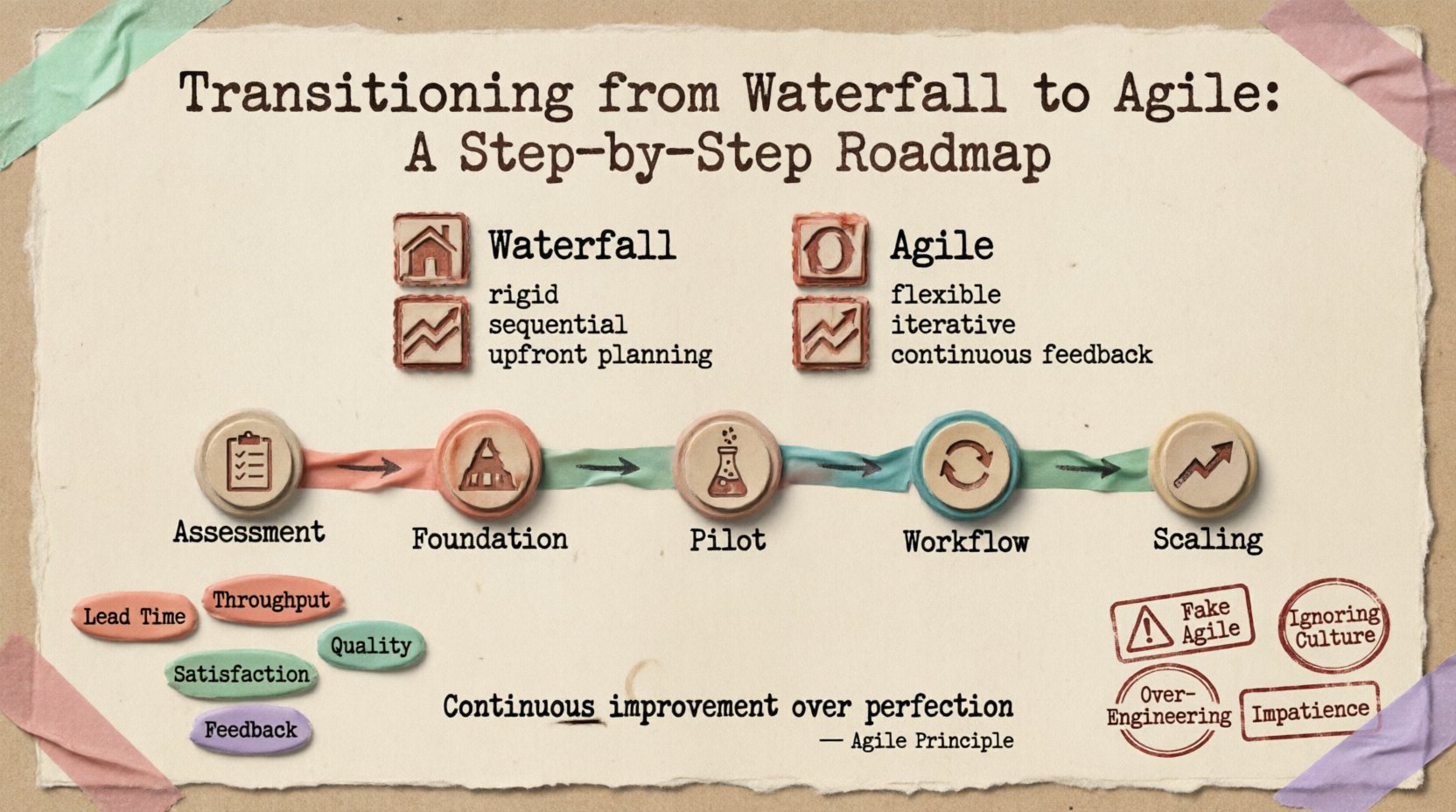
Before beginning the transition, it is essential to understand what distinguishes the old method from the new. The traditional model relies on rigid planning and sequential phases. In contrast, the iterative model focuses on flexibility and continuous feedback. Below is a comparison to clarify these distinctions.
Aspect | Traditional Approach | Iterative Approach |
|---|---|---|
Planning | Extensive upfront documentation | Just-in-time planning and refinement |
Delivery | Single release at the end | Regular, incremental releases |
Feedback | Collected after completion | Continuous feedback loops |
Flexibility | Resistance to change | Embraces changing requirements |
Roles | Strictly defined hierarchies | Collaborative, cross-functional teams |
Phase 1: Assessment and Preparation 📋
The first step involves evaluating the current state of the organization. You must identify where the bottlenecks lie and determine if the team is ready for a shift in responsibility.
Current State Analysis: Review ongoing projects. Identify delays, cost overruns, or quality issues associated with the linear method.
Stakeholder Alignment: Ensure that leadership understands the implications of this change. It is not merely a process update; it is a cultural shift.
Resource Availability: Determine if there is time and budget allocated for training and experimentation.
Phase 2: Building the Foundation 🏗️
Successful transformation starts with the people. Without the right mindset, processes will fail.
Leadership Support
Executives must champion the initiative. They need to provide resources and remove obstacles. If leadership treats the new framework as a temporary experiment, the team will not commit fully.
Define clear goals for the transformation.
Allocate budget for training workshops.
Encourage open communication regarding challenges.
Training and Education
Teams need to understand the principles behind the new workflow. This includes learning how to prioritize work, how to collaborate effectively, and how to manage expectations.
Conduct workshops on core concepts.
Invite experienced practitioners to share insights.
Create a library of resources for self-paced learning.
Phase 3: Starting Small with Pilot Projects 🧪
Do not attempt to switch the entire organization at once. Pick a single team or a specific project to serve as a pilot. This allows for controlled experimentation and learning.
Select a Pilot Team: Choose a group that is motivated and has a manageable scope.
Define a Pilot Scope: Ensure the project has a clear objective but allows for some flexibility in execution.
Establish Metrics: Decide how success will be measured before starting. This includes delivery speed, quality, and team satisfaction.
During this phase, document every challenge. Note what worked well and what caused friction. This data will inform the next steps.
Phase 4: Implementing the Workflow 🔄
Once the pilot is underway, focus on establishing the rhythm of the new workflow. This involves breaking work into smaller chunks and delivering value frequently.
Work Breakdown
Large initiatives are often too complex to manage in one go. Break them down into smaller, manageable units.
Backlog Creation: Compile a list of all desired features or tasks.
Prioritization: Order items based on value and urgency.
Capacity Planning: Estimate how much work the team can handle in a set time frame.
Iteration Cycles
Adopt a consistent cycle for development and review. This creates predictability and allows for regular adjustments.
Sprint Planning: Select items from the backlog to work on.
Daily Check-ins: Hold short meetings to discuss progress and blockers.
Review Sessions: Demonstrate completed work to stakeholders for feedback.
Retrospectives: Discuss what went well and what needs improvement.
Phase 5: Scaling the Approach 📈
Once the pilot team demonstrates success, expand the methodology to other groups. This requires careful coordination to ensure consistency across the organization.
Replicate Success: Share the lessons learned from the pilot with other teams.
Standardize Processes: Create templates for planning and reporting that can be used by multiple teams.
Coordinate Dependencies: Identify where teams rely on each other and establish clear handoff points.
Continuous Training: As new teams join, ensure they receive the same foundational training.
Common Pitfalls to Avoid ⚠️
Many organizations face setbacks during this transition. Being aware of these common traps can help you navigate them.
Fake Agile: Using the terminology without adopting the mindset. If teams still work in silos, the culture has not changed.
Ignoring Culture: Focusing only on processes while neglecting the human element. Trust and collaboration are vital.
Over-Engineering: Trying to build a perfect system before starting. It is better to start simple and improve over time.
Lack of Patience: Expecting immediate results. Cultural change takes time and sustained effort.
Measuring Success and Impact 📊
To validate the transition, you need to track specific indicators. These metrics should focus on value delivery and team health.
Metric | Description |
|---|---|
Lead Time | Time from request to delivery |
Throughput | Number of items completed in a period |
Quality Rate | Percentage of work free from defects |
Team Satisfaction | Feedback from team members on their work environment |
Customer Feedback | Input from end-users on delivered value |
Sustaining the Change 🔒
The work does not end once the new workflow is adopted. You must continue to evolve the practices to meet changing needs.
Regular Reviews: Periodically assess the effectiveness of the current processes.
Adaptation: Be willing to adjust practices based on feedback and new information.
Culture of Learning: Encourage experimentation and view failures as learning opportunities.
Recognition: Celebrate wins and acknowledge the effort required to maintain the new system.
Conclusion on the Journey 🌱
Transitioning from a linear model to an iterative one is a significant undertaking. It requires dedication from every level of the organization. By following a structured approach, focusing on people, and measuring progress, you can build a more responsive and resilient workflow. The goal is not perfection, but continuous improvement. Keep the feedback loops tight, stay open to change, and prioritize delivering value to your users.
Remember, this is not a destination but a path. As your organization grows and market conditions shift, your processes must adapt. Stay committed to the principles of collaboration, transparency, and respect. These values will guide you through the complexities of modern project management.
Final Thoughts on Implementation
Every organization is unique. What works for one may not work for another. Use this roadmap as a guide, but tailor it to your specific context. Listen to your teams, respect their insights, and be willing to pivot when necessary. The most successful transformations are those that empower the people doing the work.
With patience and persistence, you can build a system that supports innovation and efficiency. Start today, take the first step, and keep moving forward.