

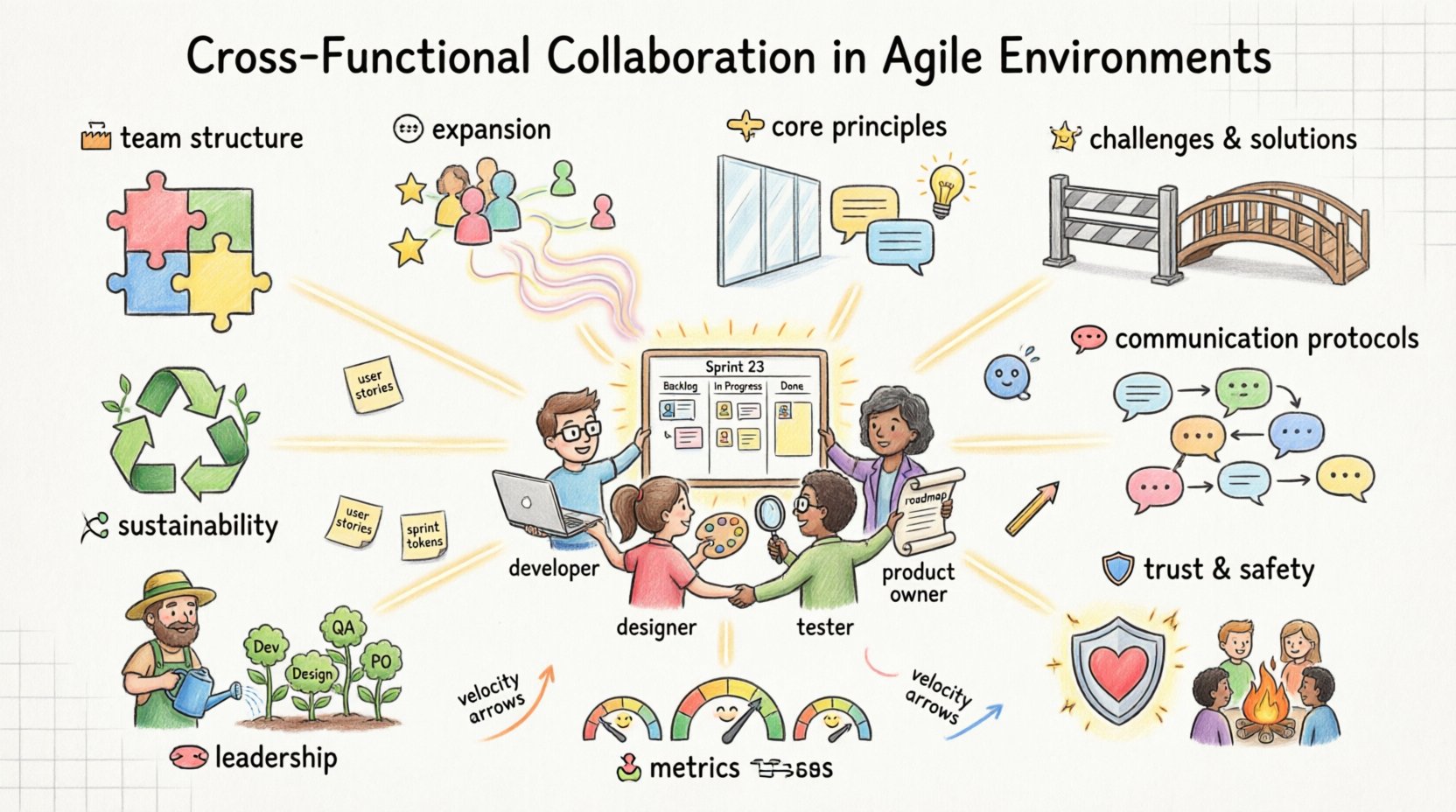
In the modern landscape of software development and product creation, the ability of diverse teams to work in unison is often the deciding factor between success and stagnation. Cross-functional collaboration in agile environments is not merely a buzzword; it is a fundamental operational requirement. When individuals with varying expertise come together to solve complex problems, the synergy created can lead to faster delivery, higher quality outcomes, and a more resilient organization.
This guide explores the mechanics of building and sustaining effective cross-functional teams. We will examine the structural requirements, communication protocols, and cultural shifts necessary to support this model. The focus remains on human dynamics and process efficacy, avoiding reliance on specific tools or platforms.
🏗️ Defining the Cross-Functional Agile Team
A cross-functional team is a group of people with different functional expertise working toward a common goal. In an agile context, this means the team possesses all the skills necessary to deliver value without external dependencies. This structure reduces bottlenecks and empowers the group to make decisions at the point of execution.
Traditional hierarchies often separate design, engineering, testing, and product management into silos. In a cross-functional setup, these roles coexist within a single unit. This proximity fosters immediate feedback loops and shared ownership.
Shared Goals: Every member aligns with the team’s objective rather than a departmental KPI.
Skill Diversity: The team includes developers, testers, designers, and business analysts working side by side.
Autonomy: The team has the authority to decide how to achieve the sprint goals.
Collective Accountability: Success and failure are shared experiences, not individual responsibilities.
🔑 Core Principles of Collaboration
Collaboration does not happen by accident. It requires intentional design and continuous reinforcement. Several core principles underpin successful interaction within these groups.
1. Transparency
Information must flow freely. When everyone has access to the same data regarding progress, risks, and priorities, decision-making becomes more accurate. Hiding work or status creates suspicion and slows down the flow of value.
2. Face-to-Face (or Real-Time) Interaction
While remote work is common, the principle of direct communication remains vital. Complex discussions require nuance that text-based messages often miss. Regular synchronous interactions help build rapport and resolve conflicts quickly.
3. Iterative Learning
Teams learn by doing. Collaboration is strengthened when the group reflects on recent work and adapts their approach. This cycle of inspection and adaptation ensures continuous improvement in how the team works together.
🚧 Common Challenges and Strategic Solutions
Implementing cross-functional collaboration introduces friction. Recognizing these points of friction allows leaders to address them proactively. The table below outlines common obstacles and practical approaches to navigate them.
Challenge | Impact on Team | Strategic Solution |
|---|---|---|
Conflicting Priorities | Resources are pulled in different directions, causing delays. | Unified Backlog: Maintain a single prioritized list managed by the team together. |
Communication Gaps | Misunderstandings lead to rework and errors. | Standardized Definitions: Agree on what “done” means for every task. |
Role Ambiguity | Tasks fall through the cracks or are duplicated. | Clear Responsibilities: Define roles based on value streams, not job titles. |
Technical Debt Accumulation | Short-term speed compromises long-term stability. | Integrated Refactoring: Allocate capacity for quality work in every cycle. |
Resistance to Change | Team members cling to old ways of working. | Psychological Safety: Encourage experimentation without fear of punishment. |
🗣️ Communication Protocols for Success
Effective communication is the lifeblood of collaboration. Without clear channels, information gets lost, and alignment fades. Establishing protocols helps manage the flow of information without overwhelming the team.
Daily Synchronization: A brief meeting to align on the day’s focus. This keeps the team synchronized on blockers and priorities.
Retrospectives: Dedicated time to discuss process improvements. This is not a blame session but a problem-solving workshop.
Definition of Ready: Work should not be started until criteria are met. This prevents context switching and wasted effort.
Definition of Done: A shared agreement on what constitutes completion. This ensures quality is not an afterthought.
Visual Management: Use boards or physical spaces to make work visible. Visual cues help everyone understand the status of work at a glance.
It is crucial to balance synchronous and asynchronous communication. Not every discussion needs a meeting. Written documentation allows team members to contribute on their own schedules, reducing meeting fatigue while maintaining clarity.
🛡️ Building Trust and Psychological Safety
Trust is the foundation of high-performing teams. Without it, collaboration becomes transactional rather than transformational. Psychological safety allows members to admit mistakes, ask questions, and propose new ideas without fear of negative consequences.
Creating an Environment of Trust
Trust is built through consistent actions over time. Leaders must model vulnerability. When a leader admits they do not know the answer, it gives permission for others to do the same.
Listen Actively: Give full attention during discussions. Validate the input of every team member.
Respect Expertise: Acknowledge that different roles bring unique value. A designer’s insight is as critical as an engineer’s code.
Handle Conflict Constructively: Disagreements are natural. Focus on the issue, not the person. Seek resolution based on shared goals.
Supporting Mental Well-being
High collaboration often implies high intensity. Burnout is a risk when teams are constantly pushing. Sustainable collaboration requires rest and recovery.
Manage Workload: Ensure the team does not commit to more work than they can realistically deliver.
Encourage Breaks: Step away from screens to maintain focus and creativity.
Recognize Effort: Acknowledge hard work and progress, not just final outputs.
📊 Measuring Collaboration Effectiveness
How do you know if collaboration is working? Relying on velocity alone is insufficient. Velocity measures output, not the health of the team. A better approach involves looking at flow and quality metrics alongside team sentiment.
Lead Time: How long does it take from start to finish? Shorter times often indicate smoother collaboration.
Cycle Time: The time spent actively working on a task. This helps identify bottlenecks.
Escaped Defects: The number of issues found after release. High quality indicates good testing and review collaboration.
Team Health Surveys: Regular feedback on morale and satisfaction.
Dependency Count: A reduction in external dependencies suggests better internal capability.
These metrics should be used for learning, not judgment. The goal is to identify areas for improvement, not to penalize the team.
👔 The Role of Leadership in Collaboration
Leaders play a critical role in enabling collaboration. Their job is to remove obstacles and create the conditions for the team to succeed. This requires a shift from command-and-control to servant leadership.
Removing Obstacles
Leaders must identify what is slowing the team down. This could be a lack of resources, unclear requirements, or organizational bureaucracy. By clearing these paths, leaders allow the team to focus on value creation.
Fostering Autonomy
Empower the team to make decisions. When leaders micromanage, collaboration suffers because individuals look to authority for guidance rather than each other. Trust the team’s ability to self-organize.
Protecting the Team
Shield the team from external noise and shifting priorities. Constant context switching destroys focus and collaboration. Maintain a stable environment where the team can settle into a rhythm.
Shielding: Filter interruptions and unnecessary meetings.
Advocacy: Represent the team’s needs to stakeholders.
Coaching: Guide individuals in developing their collaborative skills.
🔄 Sustaining Long-Term Collaboration
Building a collaborative culture is not a one-time event. It requires ongoing maintenance. As teams grow and change, the dynamics shift. Leaders and members must remain vigilant.
Continuous Improvement
Adopt a mindset of kaizen, or continuous improvement. Regularly review how the team works together. Ask what is working well and what is not. Make small adjustments frequently rather than large changes rarely.
Onboarding New Members
New members bring fresh energy but also new dynamics. Integrate them effectively to maintain team cohesion.
Mentorship: Pair new members with experienced ones.
Cultural Training: Explain team norms and values explicitly.
Gradual Integration: Allow time for new members to build relationships before assigning critical tasks.
Handling Turnover
People leave organizations. When this happens, the knowledge and relationships they hold can be lost. Document processes and encourage knowledge sharing to mitigate this risk.
Knowledge Repositories: Keep documentation up to date.
Pairing: Encourage pair work so knowledge is not siloed in one person.
Cross-Training: Rotate tasks to ensure multiple people understand different parts of the system.
🌐 Expanding Collaboration Beyond the Team
While the team is the primary unit, collaboration must extend outward. Agile teams do not exist in a vacuum. They interact with stakeholders, other teams, and the broader organization.
Stakeholder Engagement
Keep stakeholders involved without micromanaging. Regular demos and feedback sessions ensure the product meets user needs. This keeps the feedback loop tight and relevant.
Inter-Team Synergy
In large organizations, multiple teams may work on related features. Coordination is key to avoid integration issues.
Sync Meetings: Regular touchpoints between team representatives.
Shared Standards: Agree on technical and process standards.
Community of Practice: Groups focused on specific skills (e.g., security, UX) to share knowledge across teams.
🏁 Final Considerations
Establishing cross-functional collaboration is a journey, not a destination. It requires patience, commitment, and a willingness to adapt. The benefits, however, are substantial. Teams that collaborate effectively deliver value faster, innovate more, and create a more satisfying work environment.
Focus on the human element. Technology and processes are tools, but the people are the engine. By prioritizing trust, communication, and shared purpose, organizations can build agile teams that thrive in complex environments. The path forward involves continuous learning and a steadfast commitment to the principles of collaboration.