Visual Paradigm Unified Platform: Architecting a Cohesive Ecosystem
In the rapidly evolving landscape of enterprise software, the traditional approach of using disparate tools for modeling, planning, and documentation has become a bottleneck. The Visual Paradigm Unified Platform represents a paradigm shift, moving away from fragmented workflows toward a cohesive ecosystem. This tutorial explores the architecture of this unified environment, detailing how it integrates desktop power, cloud collaboration, and artificial intelligence into a single source of truth.
The Architecture of Integration
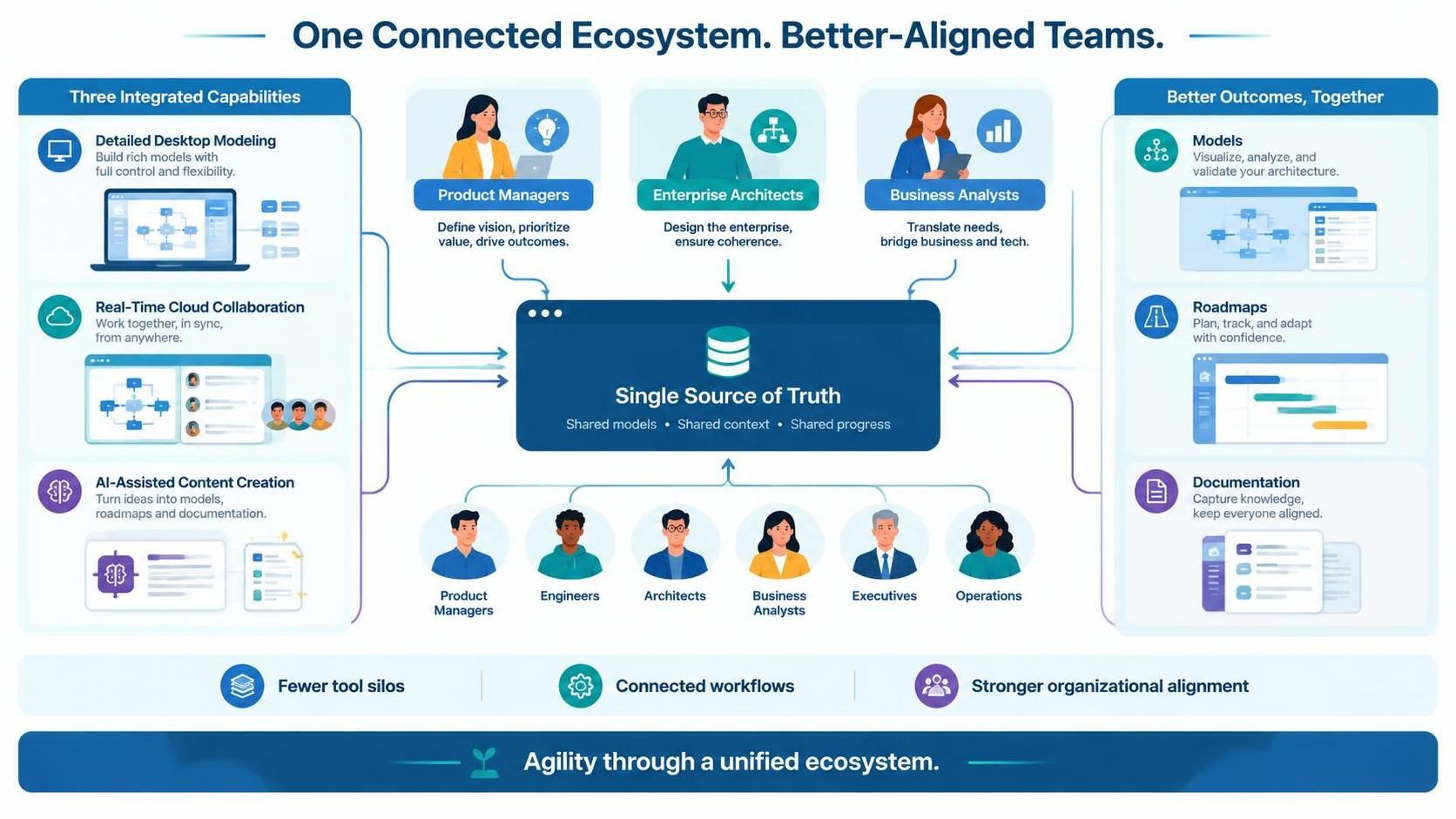
At the core of the Visual Paradigm ecosystem is the concept of the Single Source of Truth. Unlike legacy systems where a model might exist in one file, a roadmap in another, and documentation in a third, the Unified Platform ensures that all artifacts are linked, synchronized, and accessible in real-time.
The architecture is built upon three integrated capabilities that feed into this central repository:
- Detailed Desktop Modeling: For complex, high-fidelity modeling, the platform provides robust desktop capabilities. This allows architects and engineers to build rich models with full control, handling intricate logic and detailed syntax without the constraints of web browsers.
- Real-Time Cloud Collaboration: Bridging the gap between remote teams, the cloud infrastructure enables users to work together in sync. Whether a team member is in New York or London, they are accessing the same live data, ensuring that “shared context” is maintained regardless of location.
- AI-Assisted Content Creation: The modernization of the workflow includes AI integration. This capability transforms abstract ideas into structured models, roadmaps, and documentation automatically. It acts as a force multiplier, allowing professionals to focus on high-level strategy rather than manual diagramming.
Role-Based Alignment
The strength of the Visual Paradigm ecosystem lies in its ability to serve diverse roles within the same environment. The platform acts as a translator between technical and non-technical stakeholders.
Product Managers leverage the platform to define vision and prioritize value. They utilize the roadmapping features to track progress and adapt to changing market needs. For Enterprise Architects, the system is a design tool, ensuring coherence across the entire organization’s technical landscape. Business Analysts act as the bridge, translating complex business needs into technical specifications that engineers can execute.
Ultimately, this alignment extends to the broader organization, including Executives and Operations, who rely on the unified data to make informed decisions and maintain operational stability.
The VP: Ecosystem Workflow
The “VP:” ecosystem represents the home of this platform, integrating the visual paradigm (vp) with an AI ecosystem. This is not just a collection of apps; it is a functional workflow where:
- Discovery: Users can find specific applications or artifacts within the platform.
- Action: Perform actions such as creating, editing, or analyzing data.
- Artifact Generation: Send or create artifacts directly to the workspace, ensuring that the output is immediately available to the team.
By eliminating tool silos, the platform ensures that workflows are connected. This results in fewer silos, connected workflows, and stronger organizational alignment, fulfilling the strategic necessity of agility in modern enterprise.
Conclusion
Adopting the Visual Paradigm Unified Platform is a strategic move toward better alignment. By unifying modeling, collaboration, and content creation, organizations can achieve agility and ensure that every stakeholder, from the engineer to the executive, is moving in the same direction.